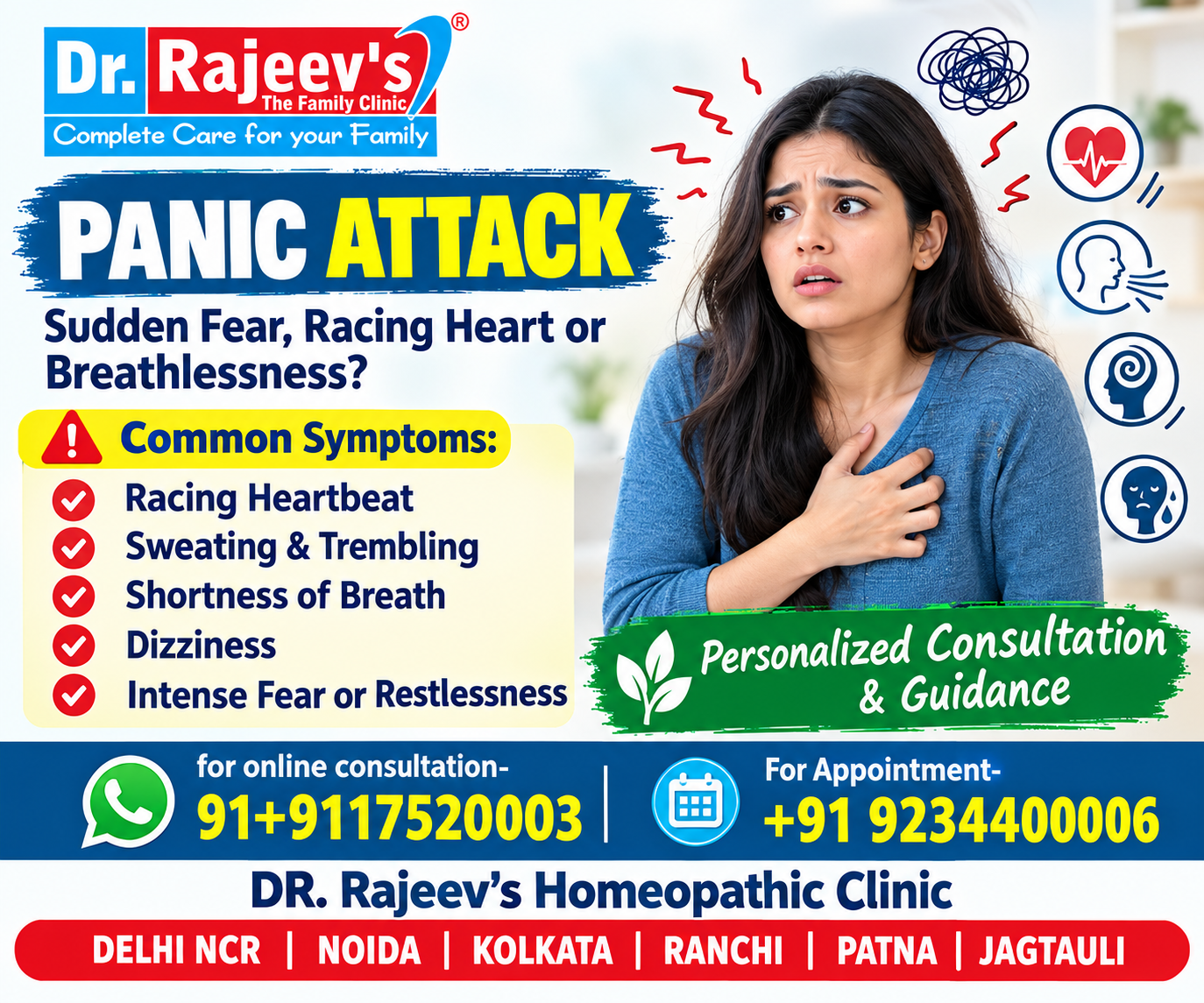
Have you ever suddenly experienced a racing heartbeat, sweating, dizziness or a feeling that something terrible is about to happen? These symptoms can occur during a panic attack. Although the experience can be frightening, understanding panic attacks can help you recognize the symptoms and seek appropriate support.
A panic attack is a sudden episode of intense fear or discomfort that can cause physical and emotional symptoms. It may occur unexpectedly or in response to a stressful situation. With proper assessment and appropriate care, people experiencing recurring panic attacks can learn ways to manage their symptoms.
This guide explains panic attack symptoms, causes, triggers, treatment options and coping strategies, along with important information about complementary homeopathic care.
A panic attack is a sudden surge of intense fear or discomfort that reaches its peak within minutes. It can happen during a stressful situation or sometimes without an obvious trigger.
During a panic attack, the body's natural alarm response becomes activated. This can lead to physical symptoms such as a rapid heartbeat, trembling, sweating and shortness of breath.
One panic attack does not necessarily mean a person has panic disorder. However, repeated unexpected attacks followed by persistent worry about having another attack may indicate panic disorder and require professional evaluation.
Recognizing panic attack symptoms can help you understand what may be happening and when to seek help.
Common symptoms include:
Symptoms can differ from person to person. Because chest pain, breathlessness and dizziness can also occur with serious medical conditions, do not automatically assume that these symptoms are caused by anxiety.
There is no single explanation for every panic attack. Several biological, psychological and environmental factors may contribute.
Ongoing stress, major life changes, relationship difficulties or work pressure may contribute to anxiety and panic symptoms in some people.
Panic attacks may occur alongside panic disorder, other anxiety disorders or certain mental health conditions.
A family history of panic attacks or anxiety disorders may increase a person's susceptibility, although it does not determine whether they will develop the condition.
Some medical conditions can cause symptoms similar to panic attacks. A healthcare professional may need to assess possible causes, including thyroid problems, heart rhythm disturbances or breathing disorders.
Excessive caffeine, nicotine, certain recreational substances or some medications may trigger or worsen symptoms in susceptible individuals.
Identifying possible panic attack causes can help guide an appropriate treatment and management plan.
Panic attacks may occur unexpectedly, but some people notice patterns or specific triggers.
Possible triggers include:
Keeping a symptom diary may help identify patterns. However, not every panic attack has a clear trigger.
A panic attack is an episode of intense fear or discomfort. Panic disorder is a mental health condition involving recurrent unexpected panic attacks and ongoing concern about further attacks or related changes in behavior.
People with panic disorder may begin avoiding situations because they fear another episode. This can affect work, relationships, travel and everyday activities.
A qualified healthcare professional can assess symptoms and determine whether panic disorder or another condition may be present.
If you recognize symptoms that have previously been assessed as panic attacks, the following techniques may help you cope:
If possible, sit somewhere safe and reduce unnecessary stimulation.
Try comfortable, gentle breathing without forcing deep breaths or holding your breath. For example, breathe in softly and breathe out slowly.
Notice your surroundings. Identify things you can see, hear and feel to help bring your attention back to the present moment.
If a healthcare professional has confirmed that your episodes are panic attacks, remind yourself that the symptoms often peak within minutes and then begin to settle.
If symptoms are new, severe or different from previous episodes, seek medical assessment rather than assuming the cause is a panic attack.
Important: New or severe chest pain, fainting, severe breathing difficulty or other alarming symptoms require urgent medical attention.
Appropriate panic attack treatment depends on the symptoms, their frequency, their effect on daily life and any underlying health conditions.
Cognitive behavioural therapy (CBT) is an evidence-based treatment for panic disorder. It can help people understand the relationship between thoughts, physical sensations and fear, while gradually learning to respond differently.
A qualified doctor or psychiatrist may recommend medication when appropriate. Options may include certain antidepressants or other medicines based on the individual's circumstances. Medication should only be used under professional guidance.
Healthy habits can support overall wellbeing and may help people manage stress:
These strategies can complement treatment but are not a substitute for appropriate care when panic attacks are frequent or severe.
Some people explore homeopathy for panic attacks because they are looking for complementary support for emotional wellbeing.
However, there is insufficient reliable scientific evidence that homeopathy effectively treats panic attacks or panic disorder. It should not be presented as a proven cure or a replacement for evidence-based psychological treatment or prescribed medication.
If you choose to consult a homeopathic practitioner, discuss your symptoms openly and continue appropriate care with a qualified healthcare professional. Do not stop prescribed medication or delay mental health assessment in favour of homeopathy.
At Dr. Rajeev’s Homeopathic Clinic, people can enquire about consultation services and discuss their concerns. Anyone experiencing recurrent panic attacks should be encouraged to obtain an appropriate medical or mental health assessment.
Consider consulting a qualified healthcare professional if:
Early assessment can help identify the cause of symptoms and guide suitable treatment.
Common symptoms include a racing heartbeat, sweating, trembling, dizziness, shortness of breath, chest discomfort and intense fear. These symptoms can also occur with medical conditions, so new or severe symptoms should be assessed.
Possible contributors include stress, anxiety-related conditions, certain substances, caffeine and physical health problems. Some panic attacks occur without an obvious trigger.
A panic attack often reaches its peak within minutes. The duration and recovery period vary from person to person.
Yes. Evidence-based options include cognitive behavioural therapy and, when appropriate, medication prescribed by a qualified professional. Individual treatment depends on the person's needs.
There is insufficient reliable scientific evidence that homeopathy cures panic attacks or panic disorder. It should not replace evidence-based mental health care.
Anxiety often involves worry or apprehension that may build over time. A panic attack is a sudden episode of intense fear or discomfort accompanied by physical and emotional symptoms.
Caffeine can cause symptoms such as a racing heartbeat and jitteriness and may worsen anxiety or trigger panic symptoms in some people.
Seek urgent medical attention for new or severe chest pain, severe breathing difficulty, fainting or other alarming symptoms. Do not assume these symptoms are caused by panic.
Panic attacks can be frightening, but effective support is available. Understanding panic attack symptoms, causes and triggers can help you recognize when to seek professional guidance.
Evidence-based care, including cognitive behavioural therapy and medication when appropriate, can help many people manage recurring panic attacks. Lifestyle strategies may provide additional support, while homeopathy has not been established as an effective treatment for panic disorder.
If panic symptoms are affecting your daily life, speak with a qualified healthcare professional to discuss assessment and suitable treatment options.


ABHI HOMEO HALL is a one and half decade old renowned clinic that offers the best quality, non-toxic and highly effective treatment in Ranchi, Patna and Delhi.
Read More