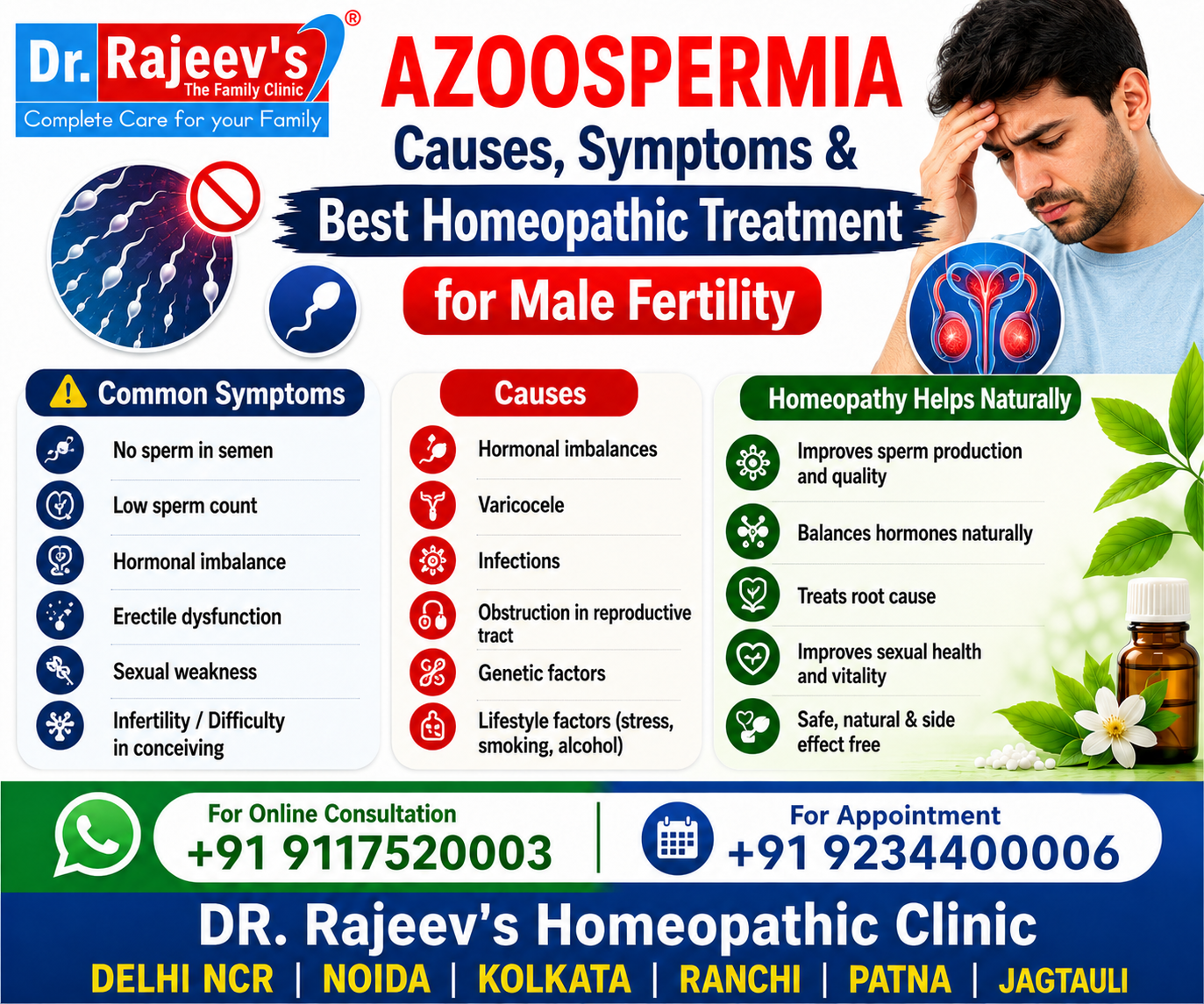
For couples trying to conceive, a diagnosis of Azoospermia can feel devastating. The term refers to the complete absence of sperm in the ejaculate. It is a significant cause of male fertility issues, accounting for approximately 10-15% of all male infertility cases.
Understanding the causes, symptoms, and treatment options is the first step toward hope. While conventional medicine offers surgical and hormonal therapies, many men are now turning to homeopathic treatment for a holistic, non-invasive approach to restoring fertility.
In this comprehensive guide, we will explore everything you need to know about Azoospermia and how homeopathy can help.
Azoospermia is a medical condition where no spermatozoa are found in the semen after a standard ejaculation. It is different from aspermia (no semen) or oligospermia (low sperm count). A diagnosis is typically confirmed through a semen analysis report.
To understand treatment, doctors classify Azoospermia into three main types:
Understanding the root cause is vital for effective treatment. Here are the most common causes of Azoospermia:
The biggest challenge with symptoms of Azoospermia is that there are usually no visible signs. Most men have normal libido, erectile function, and ejaculation volume. However, subtle indicators may include:
Key Takeaway: A lack of symptoms does not rule out Azoospermia. Always get a semen analysis if you are facing fertility challenges.
This is the core of your search intent. Homeopathic treatment for Azoospermia focuses on stimulating the body’s self-regulating mechanisms to either produce more sperm or remove functional blockages.
Unlike hormones or surgery, homeopathy treats the person, not just the sperm count. It considers genetics, past infections, emotional stress, and lifestyle.
Homeopathic remedies are prescribed based on individual symptoms. They aim to:
|
Remedy |
Indication |
|
Conium Maculatum |
Best for partial or complete Azoospermia with a history of suppressed sexual urges or testicular atrophy. |
|
X-ray |
For men exposed to radiation, chemicals, or excessive dental X-rays affecting sperm production. |
|
Selenium |
Weakness after seminal emissions; testes are small and soft; premature ejaculation low count. |
|
Agnus Castus |
Coldness of genitals; history of sexual abuse or excessive masturbation; complete impotence with zero count. |
|
Hamamelis Virginiana |
Varicocele-related Azoospermia (dilated, painful veins in scrotum). |
|
Pulsatilla |
Late effects of mumps or suppressed gonorrhea leading to testicular inflammation. |
|
Calcarea Carbonica |
Obese men with weak muscular tone, history of head sweating, and sluggish metabolism affecting fertility. |
A 34-year-old male with Azoospermia post-chemotherapy had soft, atrophic testicles. After 8 months of individualized Selenium 200C and X-ray 30C, his repeat semen analysis showed 12 million sperm/ml – allowing natural conception.
Disclaimer: Do not self-prescribe. Always consult a qualified classical homeopath for a case analysis.
|
Parameter |
Conventional Medicine |
Homeopathic Treatment |
|
Approach |
Surgical (TESE/TESA), Hormone injections (hCG/FSH), IVF/ICSI |
Constitutional remedies to trigger self-repair |
|
Side-effects |
Pain, infection risk, hormonal side-effects, costly |
None. Safe, non-toxic, non-invasive |
|
Success Metric |
Sperm retrieval for IVF |
Natural sperm production general health |
|
Best for |
Obstructive Azoospermia with viable testicles |
Hormonal, post-infectious, idiopathic Azoospermia |
To improve results of homeopathic treatment, adopt these habits:
A: Yes, in many cases of hormonal or obstructive Azoospermia, homeopathy can restore natural sperm production. However, complete testicular failure (e.g., Sertoli-cell-only syndrome) may still require assisted reproduction.
A: Spermatogenesis (sperm production) takes 70-90 days. Most patients see first improvements in semen analysis after 4-6 months of consistent homeopathic treatment, though severe cases may need 12-18 months.
A: Absolutely. Homeopathic remedies do not interfere with fertility drugs or procedures. In fact, they can improve sperm quality before a planned IVF/ICSI cycle.
A: Patients report increased morning erections, improved energy, better libido, and thicker ejaculate volume before sperm appears in the analysis report.
A: Yes. If the cause is hormonal imbalance, infection, or varicocele (mild to moderate), homeopathy lifestyle changes can reverse Azoospermia naturally. Obstructive cases may still require microsurgery.


ABHI HOMEO HALL is a one and half decade old renowned clinic that offers the best quality, non-toxic and highly effective treatment in Ranchi, Patna and Delhi.
Read More