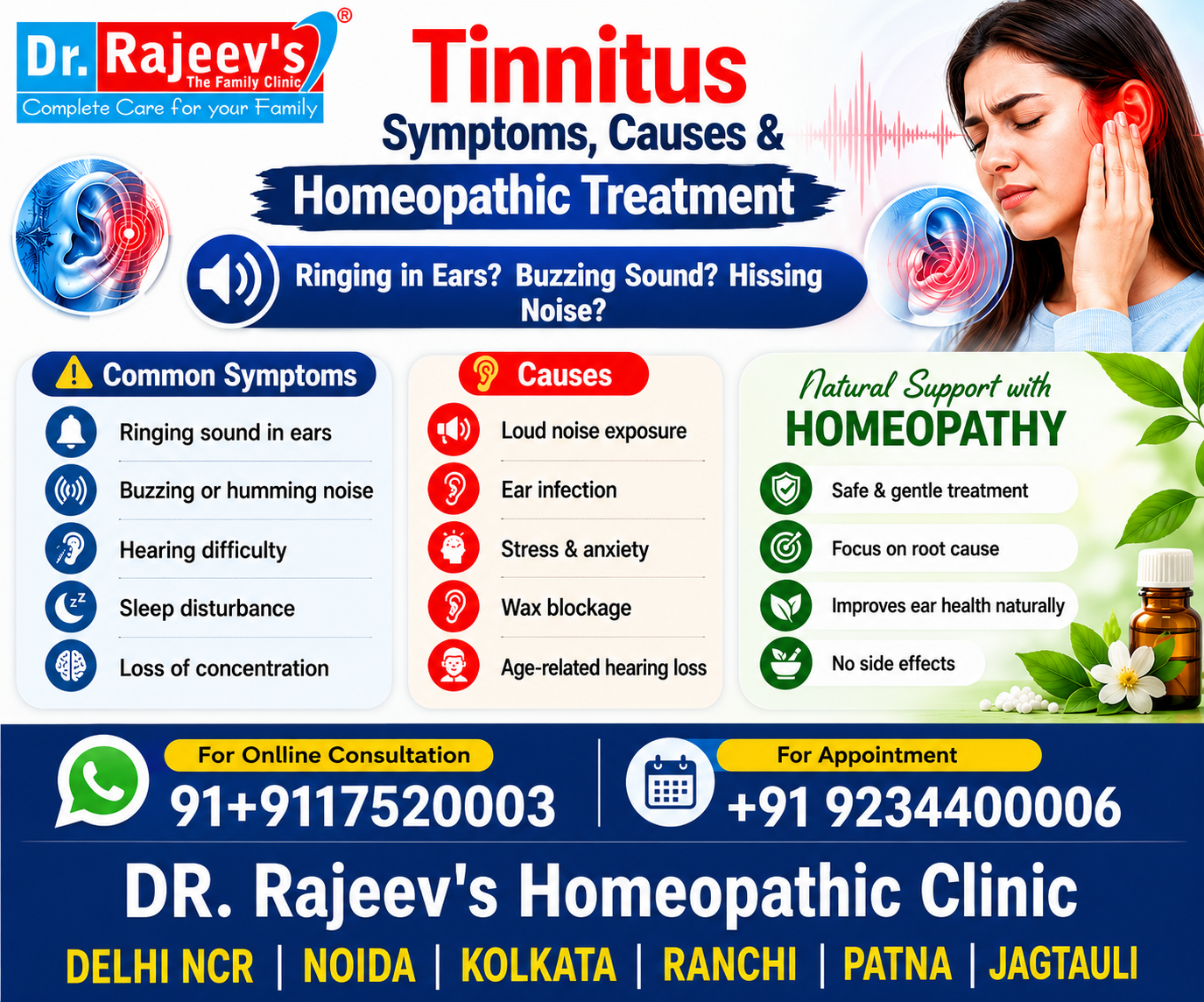
Have you ever heard a ringing, buzzing, hissing, or whistling sound in your ears when no external sound is present? This condition is known as tinnitus. It is a common problem that affects people of all ages, especially older adults. While tinnitus itself is not a disease, it is often a symptom of an underlying health condition affecting the ears or auditory system.
The constant noise can be frustrating and may interfere with sleep, concentration, and daily activities. Understanding the symptoms, causes, and available treatment options can help individuals manage this condition effectively.
At Dr. Rajeev Clinic, patients receive personalized care aimed at improving overall health and well-being. This article explores tinnitus, its causes, symptoms, and how homeopathic treatment may support overall ear health.
Tinnitus is the perception of sound without an external source. People with tinnitus may hear:
The sound may occur in one ear, both ears, or seem to come from inside the head. It may be continuous or intermittent and can vary in intensity.
The symptoms of tinnitus differ from person to person. Some individuals experience mild discomfort, while others find it significantly affects their quality of life.
Common symptoms include:
A persistent ringing sound is one of the most common signs of tinnitus.
Some people describe the sound as buzzing insects or electrical humming.
Constant noise may make it difficult to focus on work, studies, or conversations.
Many individuals with tinnitus struggle to fall asleep or stay asleep.
Some people may experience hearing loss along with tinnitus.
The persistent sound can cause emotional distress, frustration, and anxiety.
Tinnitus can develop due to several underlying factors. Identifying the cause is important for proper management.
As people age, the inner ear structures naturally change, which may contribute to tinnitus.
Frequent exposure to loud music, machinery, construction work, or explosions can damage hearing and trigger tinnitus.
Excessive earwax can block the ear canal and affect hearing, sometimes causing tinnitus.
Middle ear infections and other ear-related conditions may contribute to ringing sounds.
Some medications may cause tinnitus as a side effect in sensitive individuals.
Trauma affecting the head or neck can impact the auditory system and lead to tinnitus symptoms.
Circulatory issues and hypertension may sometimes contribute to tinnitus.
Emotional stress and anxiety can worsen tinnitus symptoms and make them more noticeable.
Several factors can increase the likelihood of developing tinnitus:
Understanding these risk factors may help individuals take preventive measures.
A healthcare professional may evaluate tinnitus through:
The doctor may ask about symptoms, lifestyle, medications, and medical conditions.
Audiometric testing helps assess hearing ability and identify hearing loss.
The ears, head, and neck may be examined for possible causes.
In some cases, scans may be recommended to rule out underlying conditions.
Proper diagnosis helps identify contributing factors and determine suitable management options.
Many individuals explore homeopathic treatment for tinnitus as part of a holistic approach to health.
Homeopathy focuses on the individual rather than just the condition. A qualified practitioner considers various factors, including:
The goal is to provide personalized care that supports the body's natural healing processes.
Homeopathic care may help support:
At Dr. Rajeev Clinic, treatment plans are designed according to each patient's unique health profile.
While professional care is important, healthy habits may also help improve comfort and quality of life.
Avoid prolonged exposure to loud noises and use ear protection when necessary.
Stress often makes tinnitus more noticeable. Relaxation techniques such as meditation, yoga, and deep breathing may help.
A regular sleep schedule can help reduce fatigue and improve overall well-being.
Physical activity supports circulation and overall health.
Some individuals notice increased tinnitus symptoms after consuming excessive caffeine or alcohol.
Proper hydration supports general health and body function.
You should seek medical advice if:
Early evaluation can help identify potential causes and guide appropriate care.
Dr. Rajeev Clinic is known for its patient-centered approach and commitment to holistic wellness.
Each patient receives individualized attention based on their specific symptoms and health history.
The clinic focuses on comprehensive assessment and customized treatment planning.
Treatment aims to support overall health and improve quality of life.
Convenient consultation services are available across various clinic branches.
Tinnitus is the perception of ringing, buzzing, humming, or other sounds in the ears without an external source.
No. Tinnitus is usually a symptom of an underlying condition affecting the ears or auditory system.
Common causes include hearing loss, loud noise exposure, ear infections, earwax buildup, stress, and certain medications.
Yes. Stress and anxiety can increase the perception and severity of tinnitus symptoms.
Yes. Many people with tinnitus experience difficulty falling asleep or staying asleep.
Diagnosis may include medical history, hearing tests, physical examination, and sometimes imaging studies.
Homeopathy focuses on individualized care and overall well-being. A qualified practitioner can assess symptoms and recommend a personalized treatment plan.
Consult a healthcare professional if tinnitus is sudden, persistent, worsening, or associated with hearing loss or dizziness.
Yes. Repeated exposure to loud sounds is one of the most common causes of tinnitus.
You can consult the experienced team at Dr. Rajeev Clinic for personalized guidance and holistic care for tinnitus-related concerns.


ABHI HOMEO HALL is a one and half decade old renowned clinic that offers the best quality, non-toxic and highly effective treatment in Ranchi, Patna and Delhi.
Read More