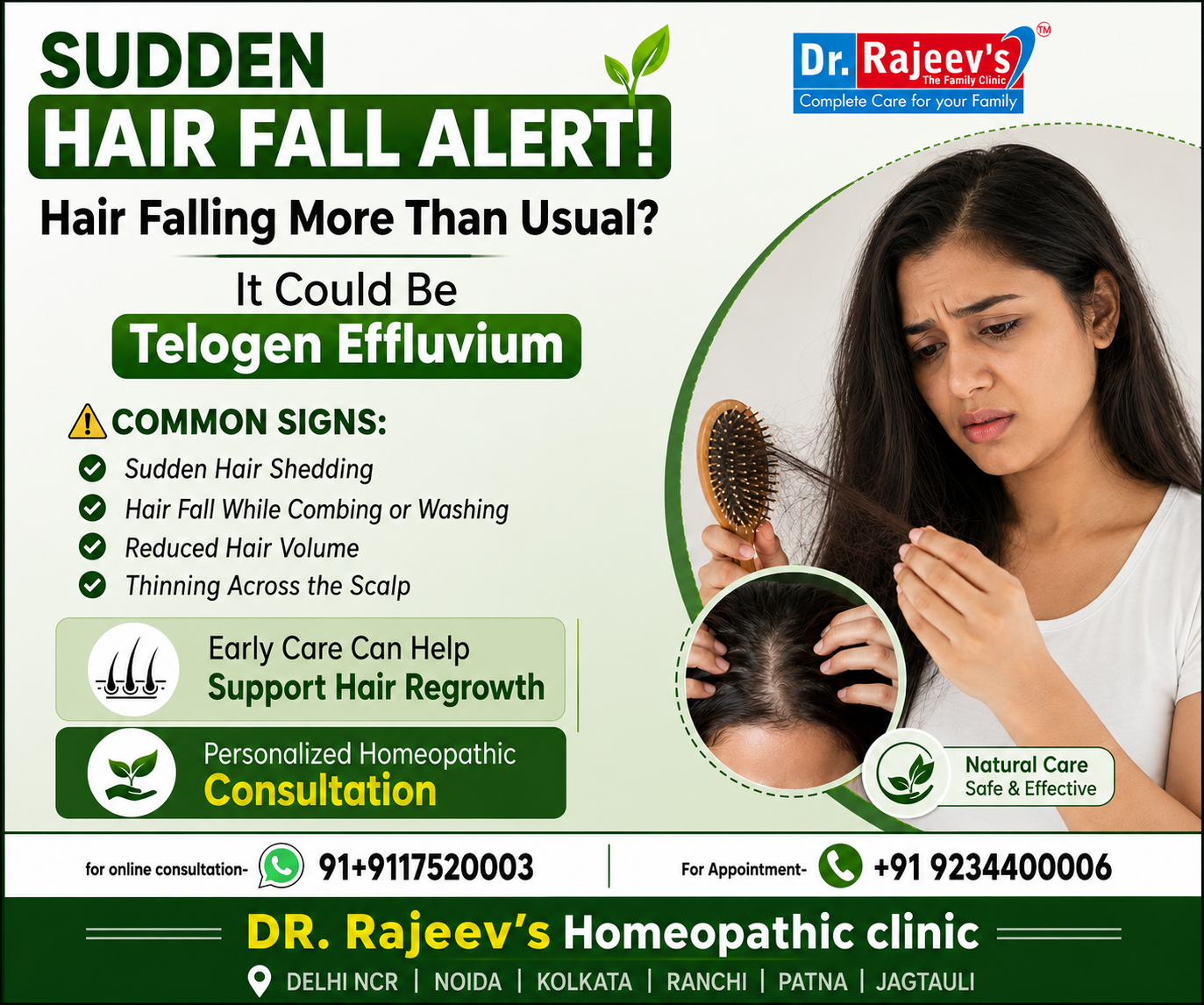
Telogen Effluvium is a common cause of sudden hair shedding that often occurs after physical or emotional stress. Many people notice excessive hair fall while combing, washing, or styling their hair and become worried that they are going bald. In most cases, telogen effluvium hair loss is temporary, and hair growth gradually returns over time.
This condition usually appears two to three months after a triggering event such as fever, illness, surgery, childbirth, significant stress, weight loss, or nutritional deficiency. Understanding telogen effluvium symptoms, identifying the underlying cause, and seeking proper medical evaluation can help support healthy hair regrowth.
Many individuals also explore homeopathic treatment for telogen effluvium as complementary supportive care for overall wellness. At Dr. Rajeev Homeopathic Clinic, Dr. Rajeev provides personalized homeopathic consultations that consider stress levels, nutrition, hormonal health, lifestyle, and overall well-being while encouraging appropriate medical evaluation when needed.
Hair normally grows in cycles:
In telogen effluvium, a larger-than-normal number of hair follicles enter the resting phase at the same time. After a few months, these hairs shed, resulting in noticeable hair fall.
Unlike permanent hair loss conditions, telogen effluvium usually does not destroy the hair follicles, so regrowth is often possible once the trigger is corrected.
Telogen Effluvium Symptoms
Many people ask, "What are the symptoms of telogen effluvium?"
Common telogen effluvium symptoms include:
Excessive hair fall is noticed suddenly.
More hair than usual is seen in the shower, comb, or pillow.
Hair becomes thinner across the entire scalp rather than in one specific area.
Ponytails may feel less thick than before.
Loose hairs are commonly noticed throughout the day.
The scalp may appear more visible because of overall thinning.
Seek medical evaluation if hair loss is patchy, associated with scalp pain, redness, scaling, or persists for several months.
Understanding telogen effluvium causes and treatment is important for effective management.
High fever, severe infection, surgery, or major illness can trigger hair shedding.
Significant emotional stress may contribute to hair loss.
Postpartum hair shedding is a common form of telogen effluvium.
Crash diets or sudden weight loss can affect the hair cycle.
Low iron, vitamin D, vitamin B12, zinc, or protein levels may trigger excessive shedding.
Both hypothyroidism and hyperthyroidism can contribute to hair loss.
Some medicines may affect the hair growth cycle.
You may be more likely to develop telogen effluvium if you:
Doctors may recommend:
Discussion of recent illness, stress, childbirth, medications, and diet.
Assessment of hair density and scalp health.
A gentle pull test may show increased shedding.
Iron levels, thyroid function, vitamin levels, and other tests may be advised.
Further tests may be recommended if another cause of hair loss is suspected.
Telogen Effluvium Treatment
The most important step is identifying and correcting the trigger.
Conventional management may include:
Most people notice improvement within a few months once the trigger is addressed.
Many individuals choose homeopathic treatment for telogen effluvium because it follows an individualized approach.
At Dr. Rajeev Homeopathic Clinic, Dr. Rajeev evaluates:
A personalized consultation is used to develop an individualized wellness plan.
Important: Telogen Effluvium may be associated with medical conditions such as thyroid disease, anemia, nutritional deficiencies, or hormonal disorders. Homeopathy should be considered complementary supportive care and not a replacement for evidence-based medical diagnosis and treatment. Persistent or severe hair loss should be evaluated by a qualified healthcare professional.
Healthy habits can support overall hair health and hair regrowth.
Include eggs, pulses, dairy products, fish, lean meat, nuts, and seeds.
Follow your doctor's advice regarding iron, vitamin D, or other supplements.
Yoga, meditation, breathing exercises, and regular relaxation may help.
Aim for 7–9 hours of quality sleep.
Limit frequent use of straighteners, curling irons, and hair dryers.
Choose mild shampoos and avoid harsh chemical treatments.
Adequate hydration supports overall health.
Can Telogen Effluvium Be Prevented?
Not all cases can be prevented, but you may reduce the risk by:
At Dr. Rajeev Homeopathic Clinic, we focus on individualized, patient-centered care.
Telogen Effluvium is a common cause of sudden, diffuse hair shedding that is often temporary. Recognizing telogen effluvium symptoms, identifying the triggering factor, and receiving appropriate medical evaluation can help support healthy hair regrowth.
Most individuals recover gradually once the underlying cause is corrected. A balanced diet, stress management, adequate sleep, and proper hair care play an important role in recovery. Homeopathic treatment for telogen effluvium may provide complementary support for overall wellness when used alongside evidence-based medical care.
If you are experiencing excessive hair shedding or persistent hair thinning, consult a qualified healthcare professional. For personalized homeopathic consultation and holistic hair wellness support, visit Dr. Rajeev Homeopathic Clinic.
Telogen Effluvium is a temporary condition in which a large number of hair follicles enter the resting phase, leading to excessive hair shedding.
Sudden hair shedding, diffuse thinning, reduced hair volume, and increased hair fall while washing or combing are common symptoms.
Common causes include stress, fever, illness, surgery, childbirth, rapid weight loss, nutritional deficiencies, thyroid disorders, and certain medications.
In most cases, it is temporary and hair regrowth occurs after the trigger is corrected.
Doctors diagnose it through medical history, scalp examination, hair pull test, and blood tests when necessary.
Homeopathy may be used as complementary supportive care for overall wellness and hair health. It should not replace medical evaluation or treatment of underlying conditions.
Hair shedding usually begins two to three months after the trigger and may continue for several months before improvement occurs.
Protein-rich foods, iron-rich foods, fruits, vegetables, nuts, seeds, and adequate hydration support healthy hair growth.
Seek medical advice if hair loss is severe, persistent, patchy, associated with scalp symptoms, or accompanied by fatigue, weight changes, or other health problems.
You can visit Dr. Rajeev Homeopathic Clinic for personalized homeopathic consultations and holistic support for hair and scalp wellness.


ABHI HOMEO HALL is a one and half decade old renowned clinic that offers the best quality, non-toxic and highly effective treatment in Ranchi, Patna and Delhi.
Read More