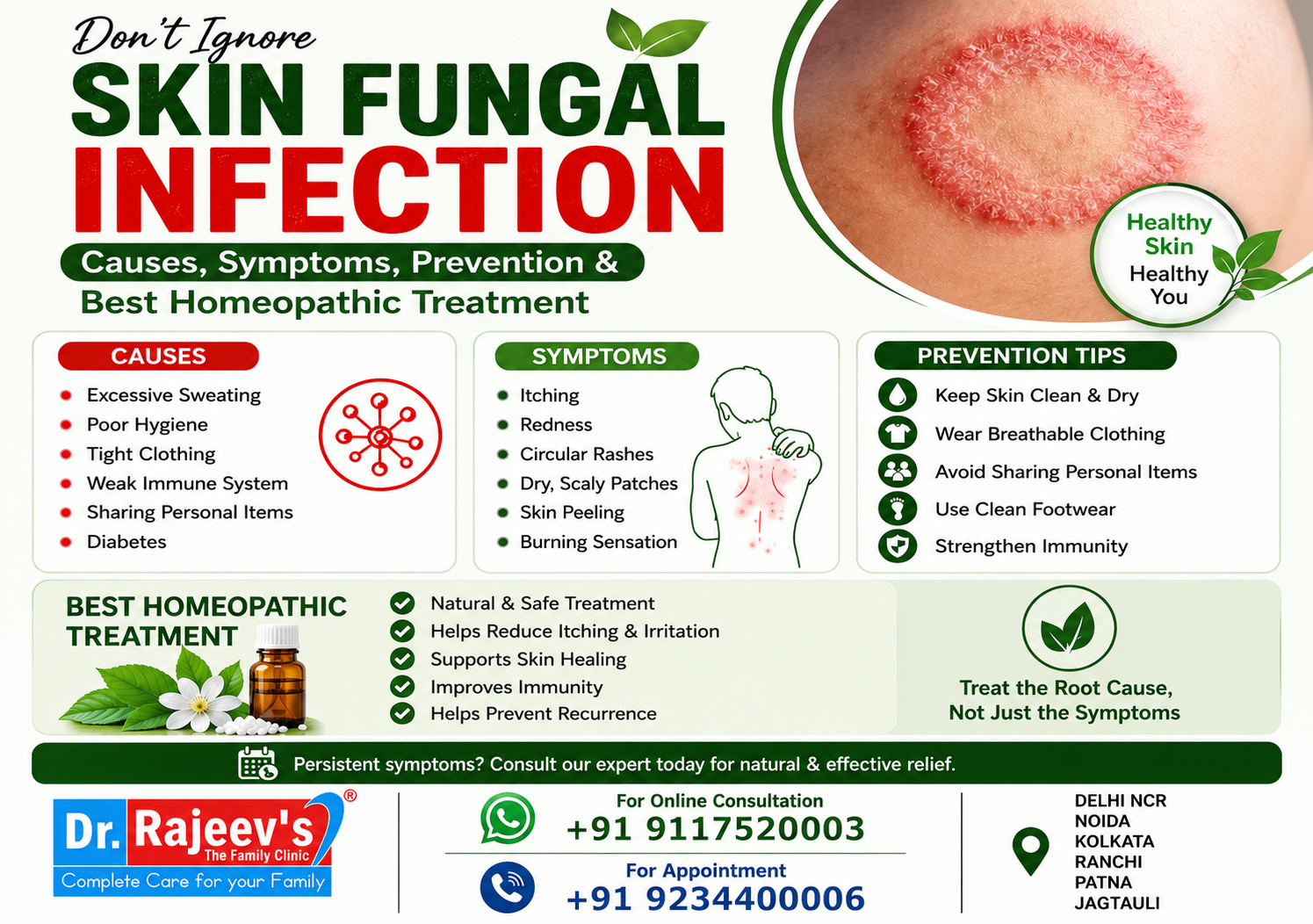
Skin fungal infections are among the most common skin conditions affecting people of all ages. Warm weather, excessive sweating, poor hygiene, and weakened immunity can increase the risk of developing a skin fungal infection. Although these infections are usually not life-threatening, they can cause significant discomfort, itching, redness, and recurring skin problems if left untreated.
This guide explains the causes, symptoms, prevention tips, and the best homeopathic treatment options for skin fungal infection management.
A skin fungal infection occurs when fungi grow and multiply on the skin. Fungi thrive in warm, moist environments and commonly affect areas such as the feet, groin, scalp, nails, and skin folds.
Common types of fungal infections include:
A skin fungal infection can spread through direct contact with infected individuals, contaminated surfaces, or pets carrying fungal spores.
Several factors can contribute to a skin fungal infection, including:
Warm and humid conditions create an ideal environment for fungal growth.
Infrequent bathing and wearing unclean clothes may increase the risk of fungal infections.
People with weakened immunity are more susceptible to a skin fungal infection.
Tight-fitting clothes can trap moisture and encourage fungal growth.
Using shared towels, shoes, or clothing can spread fungal infections.
Individuals with diabetes may have a higher risk of developing recurrent fungal infections.
The symptoms of a skin fungal infection may vary depending on the affected area.
Common signs include:
If symptoms persist or worsen, professional medical advice should be sought.
A skin fungal infection can spread through:
Maintaining proper hygiene can significantly reduce the risk of transmission.
Preventing a skin fungal infection is often easier than treating one.
Dry your skin thoroughly after bathing, especially between the toes and skin folds.
Choose loose-fitting cotton clothing to reduce moisture buildup.
Do not share towels, shoes, socks, or grooming tools.
Regular bathing and clean clothing help prevent fungal growth.
Wear slippers in public showers, swimming pools, and locker rooms.
A healthy diet and regular exercise can support your immune system.
Homeopathy focuses on treating the individual as a whole rather than simply suppressing symptoms. The goal of homeopathic treatment for skin fungal infection is to improve the body's natural healing response and address factors that may contribute to recurrent infections.
Homeopathic treatment may help:
Since remedies are selected based on individual symptoms and health history, consultation with a qualified homeopathic practitioner is recommended.
To support treatment and recovery from a skin fungal infection:
These habits can help minimize recurrence and promote healthy skin.
Seek medical attention if:
Early treatment can prevent complications and recurrence.
A skin fungal infection is commonly caused by fungi growing in warm, moist areas of the body. Excessive sweating, poor hygiene, and a weakened immune system can increase the risk.
Yes, a skin fungal infection can spread through direct contact with infected skin, contaminated surfaces, or shared personal items.
Homeopathic treatment may help manage symptoms and support the body's natural healing process. Individualized treatment is recommended.
Keeping the skin clean and dry, wearing breathable clothing, and avoiding shared personal items can help prevent a skin fungal infection.
Common symptoms include itching, redness, scaly patches, skin peeling, burning sensation, and circular rashes.
Yes, recurrence is possible if preventive measures are not followed or underlying risk factors remain unaddressed.
You should consult a healthcare professional if symptoms persist, worsen, or frequently return despite treatment.


ABHI HOMEO HALL is a one and half decade old renowned clinic that offers the best quality, non-toxic and highly effective treatment in Ranchi, Patna and Delhi.
Read More