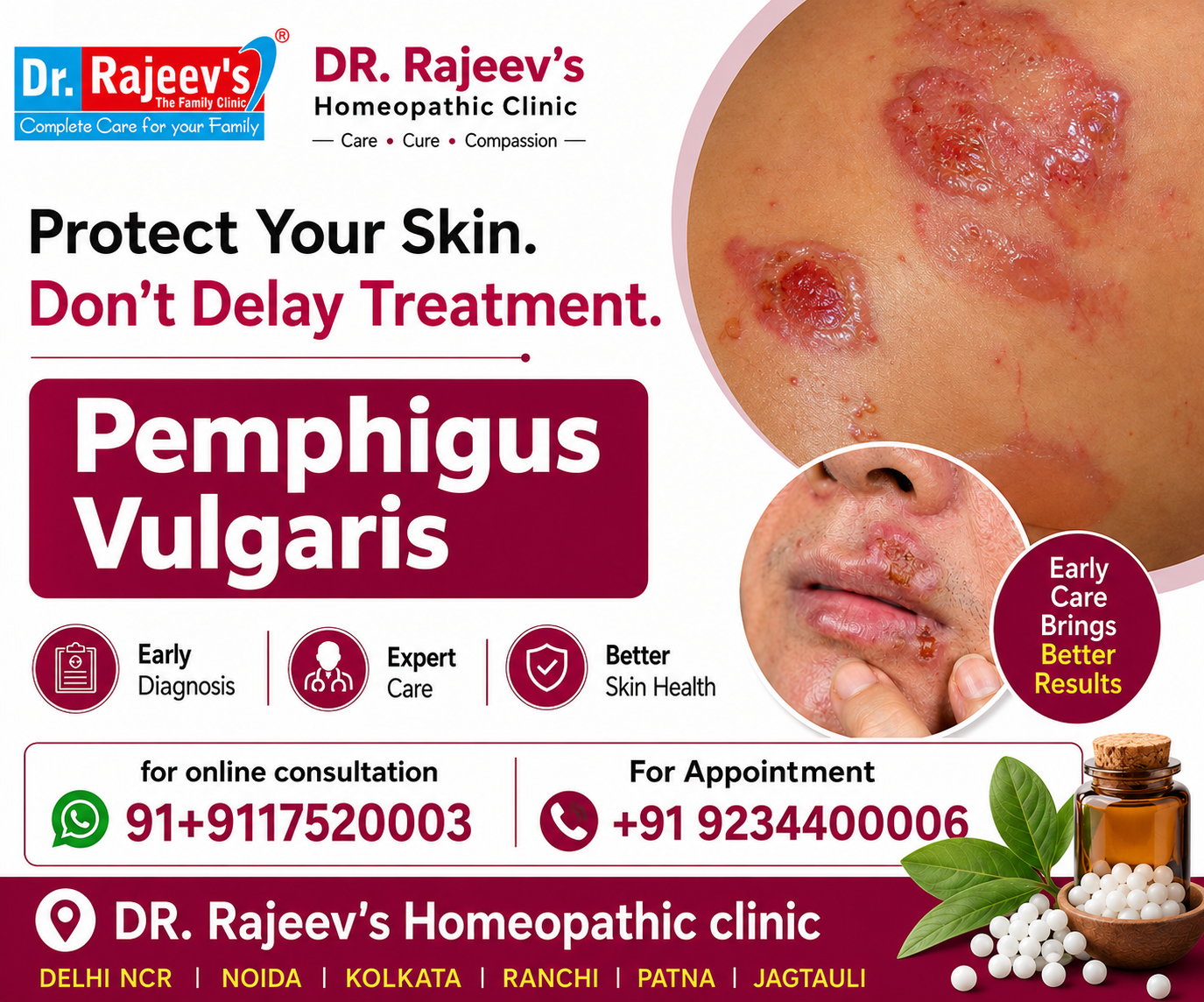
Pemphigus Vulgaris is a rare but serious autoimmune skin disease that causes painful blisters and sores on the skin and mucous membranes, especially inside the mouth. Since it is a chronic condition, early diagnosis and appropriate treatment are essential to prevent complications and improve quality of life.
Many people initially mistake the blisters for common skin infections or mouth ulcers, delaying proper treatment. Recognizing pemphigus vulgaris symptoms early can help reduce disease progression and support better skin health.
In addition to conventional medical treatment, some patients consider homeopathic treatment for pemphigus vulgaris as complementary supportive care to promote overall well-being. At Dr. Rajeev Homeopathic Clinic, Dr. Rajeev provides individualized homeopathic consultations tailored to each patient's overall health while encouraging appropriate dermatological care.
What is Pemphigus Vulgaris?
Pemphigus Vulgaris is an autoimmune blistering disease in which the body's immune system mistakenly attacks proteins that hold skin cells together. This causes fragile blisters to develop on the skin and inside the mouth.
The blisters often break easily, leaving painful open sores that may become infected if not treated promptly.
Although pemphigus vulgaris disease is uncommon, it requires proper medical diagnosis and long-term management by a qualified healthcare professional.
Pemphigus Vulgaris Symptoms
Many patients ask,
"What are the symptoms of pemphigus vulgaris?"
Common pemphigus vulgaris symptoms include:
Painful blisters inside the mouth are often the first sign.
Soft, fragile blisters appear on the chest, back, scalp, face, or other body parts.
Blisters rupture easily, causing skin peeling.
Broken blisters leave raw, painful areas.
Mouth ulcers may make eating and drinking uncomfortable.
Blisters in the throat can affect speaking or swallowing.
The affected skin becomes sensitive and painful.
Causes of Pemphigus Vulgaris
Understanding pemphigus vulgaris causes and treatment begins with identifying the underlying immune response.
The immune system attacks healthy skin cells by mistake.
A family history may slightly increase the risk.
Some medicines have been associated with triggering the disease in susceptible individuals.
Although not fully understood, infections or environmental triggers may contribute in some cases.
Risk Factors
You may have a higher risk if you:
How is Pemphigus Vulgaris Diagnosed?
Early diagnosis is important for effective management.
Doctors may recommend:
Reviewing symptoms and previous illnesses.
Examining the skin and mouth blisters.
A small skin sample helps confirm the diagnosis.
Blood tests detect antibodies commonly associated with pemphigus vulgaris.
Other tests may be performed depending on the severity of the condition.
Treatment Options for Pemphigus Vulgaris
The primary treatment for pemphigus vulgaris is conventional medical care under a dermatologist. Treatment may include:
Regular follow-up is important to monitor the condition and adjust treatment.
Homeopathic Treatment for Pemphigus Vulgaris
Many individuals explore homeopathic treatment for pemphigus vulgaris as part of a holistic healthcare plan.
At Dr. Rajeev Homeopathic Clinic, Dr. Rajeev evaluates:
Based on the consultation, an individualized homeopathic treatment plan is prepared.
Personalized Consultation
Holistic Healthcare Approach
Lifestyle & Nutritional Guidance
Individualized Wellness Support
Long-Term Health Monitoring
Important: Pemphigus Vulgaris is a potentially serious autoimmune condition that requires diagnosis and treatment by a qualified dermatologist. Homeopathy may be used as complementary supportive care but should never replace evidence-based medical treatment, especially because untreated disease can lead to serious complications.
Lifestyle Tips for Healthy Skin
Along with medical treatment, these healthy habits may support recovery and skin health:
Use soft toothbrushes and follow your doctor's advice.
Soft foods may reduce discomfort when mouth sores are present.
Adequate hydration supports overall health.
Avoid friction, harsh soaps, and excessive sun exposure.
Keep affected skin clean and follow wound-care instructions.
Stress management techniques may improve overall well-being.
Can Pemphigus Vulgaris Be Prevented?
There is currently no known way to prevent pemphigus vulgaris disease. However, early diagnosis, prompt treatment, and regular follow-up can help reduce complications and improve quality of life.
Why Choose Dr. Rajeev Homeopathic Clinic?
At Dr. Rajeev Homeopathic Clinic, patient-centered care focuses on supporting overall health through individualized consultations.
Dr. Rajeev believes in treating each patient individually while encouraging coordinated care with dermatology specialists when needed.
Conclusion
Pemphigus Vulgaris is a rare but serious autoimmune skin disease that requires early diagnosis and proper medical treatment. Symptoms such as skin blisters, painful mouth sores, and peeling skin should never be ignored.
With timely dermatological care, healthy lifestyle habits, and regular follow-up, many patients can successfully manage the condition. Homeopathic treatment for pemphigus vulgaris may provide complementary support for overall wellness but should always be used alongside standard medical care.
If you notice symptoms suggestive of pemphigus vulgaris, consult a qualified dermatologist promptly. For individualized homeopathic consultation and holistic health support, visit Dr. Rajeev Homeopathic Clinic.
Frequently Asked Questions (FAQs)
Pemphigus Vulgaris is a rare autoimmune blistering disease that causes painful blisters on the skin and inside the mouth.
Common symptoms include painful mouth sores, fragile skin blisters, peeling skin, open sores, and difficulty eating or swallowing.
It occurs when the immune system mistakenly attacks healthy skin cells. Genetics and certain medications may also play a role.
No. Pemphigus Vulgaris is an autoimmune disease and cannot spread from one person to another.
Doctors diagnose it through a physical examination, skin biopsy, blood tests, and medical history.
Treatment usually includes corticosteroids, immunosuppressive medicines, biologic therapies when appropriate, wound care, and regular medical follow-up.
Homeopathy may be considered as complementary supportive care for overall well-being but should not replace dermatologist-prescribed treatment.
There is currently no permanent cure, but appropriate medical treatment can help control symptoms and reduce flare-ups.
Seek medical attention if you develop persistent skin blisters, painful mouth ulcers, difficulty swallowing, or widespread skin peeling.
You can visit Dr. Rajeev Homeopathic Clinic for personalized homeopathic consultations and holistic supportive care alongside appropriate dermatological treatment.


ABHI HOMEO HALL is a one and half decade old renowned clinic that offers the best quality, non-toxic and highly effective treatment in Ranchi, Patna and Delhi.
Read More