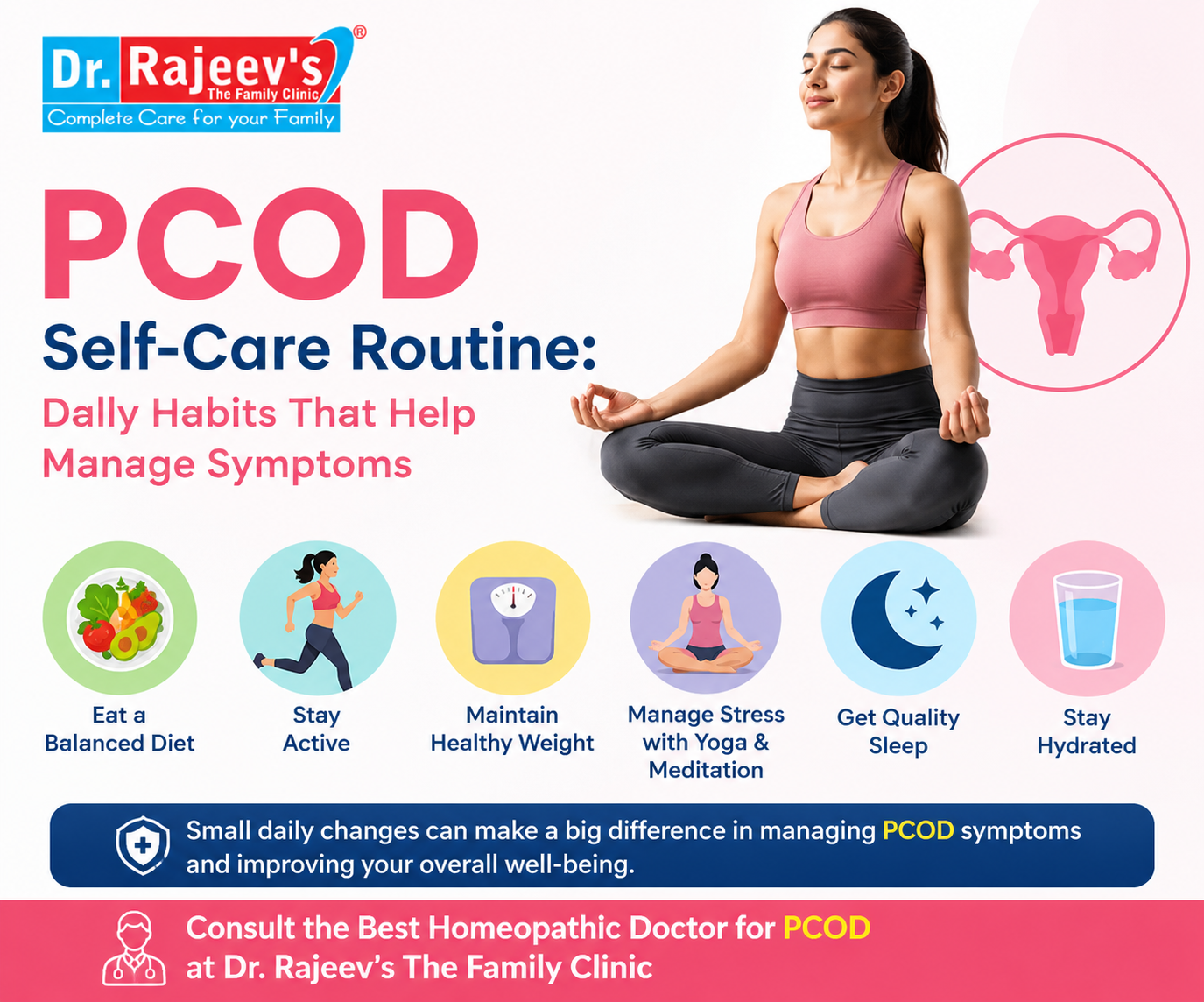
When you have PCOD (Polycystic Ovarian Disease), coping with it can be quite challenging. Its symptoms impact your life not just physically, but far beyond that—ranging from irregular periods to hormonal imbalances, and from weight gain to mood swings. What is the good news? Having a consistent self-care plan can help with the management of your symptoms naturally.
Learning to develop healthy habits every day is one of the most important things you can do, whether you are newly diagnosed or already have been living with PCOD for several years. Many women also prefer to seek the best homeopathy doctor for PCOD to begin gentle and side-effect free treatments that suit their body along with changing their lifestyle.
PCOD is a hormonal disorder where the immature or partially developed eggs of the ovary get stored and over time turn into cysts. It impacts millions of women and is strongly associated with insulin resistance, inflammation and lifestyle.
In contrast to PCOS (which is more serious), PCOD may be effectively treated with consistent self-care, dietary changes and holistic treatments. Which is why it's so important to establish a daily routine, you can't just help, you must.
What you eat first thing in the morning sets the tone for your blood sugar levels all day. Women with PCOD are often insulin-resistant, so eating a high-sugar or processed breakfast can trigger hormonal spikes.
Avoid: White bread, packaged cereals, sugary tea or coffee on an empty stomach.
Regular physical activity helps regulate insulin levels, reduce androgens, and maintain a healthy weight—all of which are crucial for managing PCOS.
Even a 30-minute walk every morning can significantly improve your hormonal health over time.
Diet is one of the most powerful tools in managing PCOD. A low-glycemic index (GI) diet helps stabilize blood sugar and reduce inflammation — two root causes of PCOD symptoms.
Poor sleep disrupts cortisol and melatonin levels, which in turn worsen hormonal imbalance. Women with PCOD who sleep less than 7 hours often report worsening symptoms.
Chronic stress raises cortisol levels, which disrupts the delicate balance of reproductive hormones. For women with PCOD, stress management is not optional — it is medical.
Consulting the best homeopathy doctor for PCOD can also help address the emotional and psychological aspects of PCOD alongside physical symptoms, since homeopathy treats the whole person — body, mind, and emotions.
Your liver plays a key role in metabolizing excess hormones. Keeping it healthy through hydration and detox-supporting foods helps reduce estrogen dominance, which is common in PCOD.
Knowledge is power. Tracking your menstrual cycle, energy levels, moods, and physical symptoms in an app or journal helps you recognize patterns and better communicate with your doctor.
This data is extremely valuable when you see a Best homeopathic doctor for PCOD, as it helps them understand your individual hormonal patterns and prescribe the most appropriate constitutional remedy.
Homeopathy offers a safe, natural, and individualized approach to Best Homeopathic doctor for PCOD treatment. Unlike hormonal pills that suppress symptoms temporarily, homeopathic medicines work at the root level to restore hormonal balance, regulate ovulation, and improve overall health — without side effects.
A best homeopathy doctor for PCOD will study your complete medical history, emotional health, lifestyle, and symptoms before recommending a customized treatment plan. Common remedies prescribed include Pulsatilla, Sepia, Natrum Mur, and Calcarea Carbonica — all selected based on your unique constitution.
Yes! Many women successfully manage PCOD through diet, exercise, stress management, and holistic therapies like homeopathy. However, always consult a qualified doctor before stopping any prescribed medication.
After a couple of months of regular self-care, most women feel better – they experience more energy, improved mood and regular cycles. Depending on their body type and the severity of the PCOD, the results are different.
Yes. Homeopathy is a very popular treatment for PCOD problems. The best homeopathy doctor for PCOD will be able to formulate a treatment plan for you which focuses on the underlying imbalance of hormones in your body, not just addressing the symptoms of polycystic ovary disease.
Absolutely Homeopathy is most effective combined with a healthy lifestyle. Homeopathic treatment is greatly aided by diet, exercise and stress management.
Low Glycaemic Index (GI) & Anti-inflammatory diet with a high intake of whole grains, vegetables, lean proteins, and healthy fats is ideal for PCOD. Steer clear of sugar, refined carbohydrates and processed foods.
Yes. The prolonged exposure to stress increases cortisol, which can aggravate the symptoms of PCOD, such as irregular periods, acne, and weight gain. Stress Management Daily is a must.


ABHI HOMEO HALL is a one and half decade old renowned clinic that offers the best quality, non-toxic and highly effective treatment in Ranchi, Patna and Delhi.
Read More