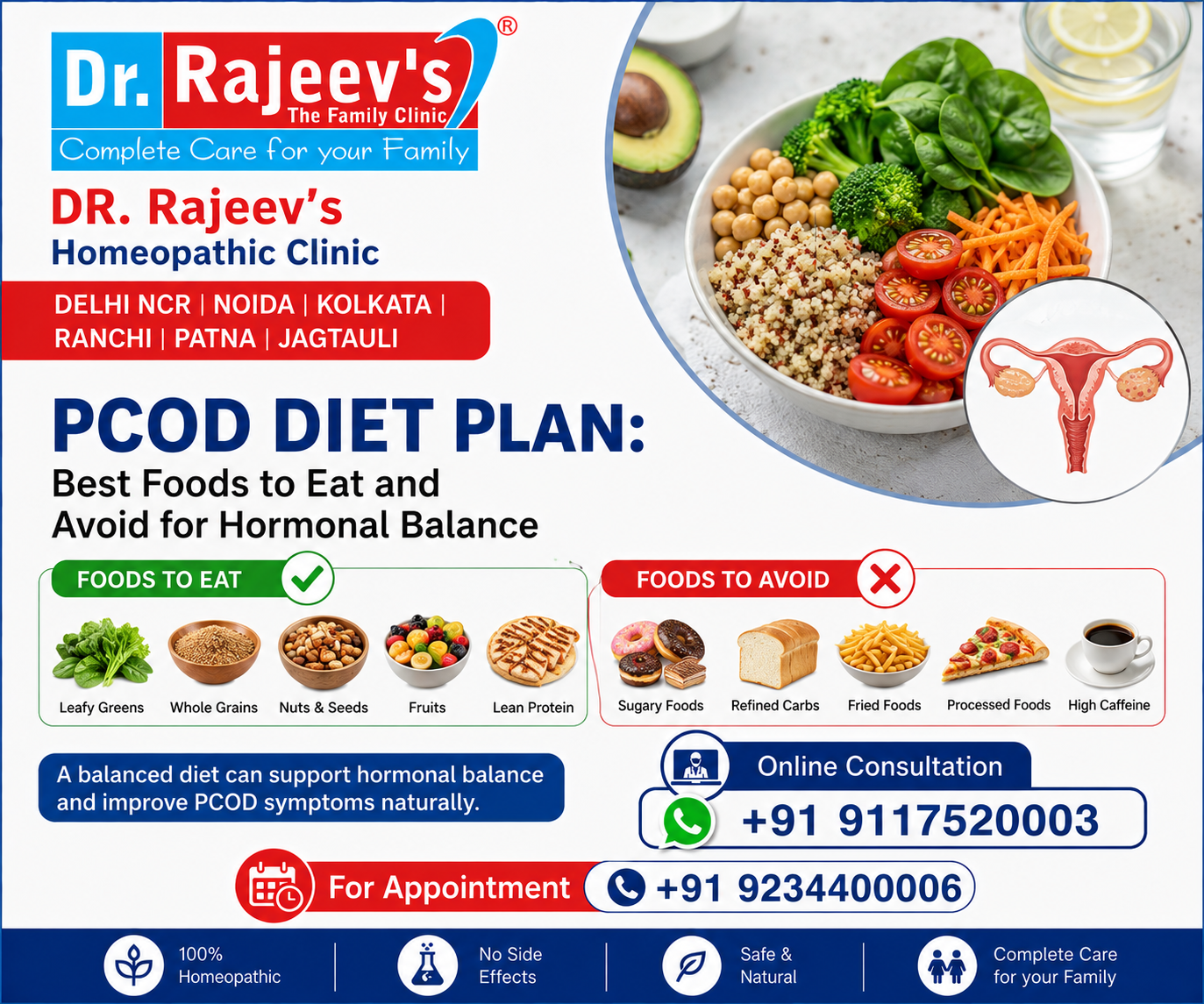
Food is medicine — and for women living with PCOD (Polycystic Ovarian Disease), this statement could not be more true. What you eat every single day directly influences your hormone levels, insulin sensitivity, body weight, and menstrual regularity. In fact, dietary changes are considered one of the most powerful first-line interventions for managing PCOD naturally.
Whether you are newly diagnosed or have been managing PCOD for years, the right diet plan — combined with holistic care from the best homeopathy doctor for PCOD — can dramatically reduce your symptoms and restore hormonal balance from within.
This comprehensive PCOD diet guide covers exactly what to eat, what to avoid, and how to build a sustainable meal routine that supports your hormones every day.
At its core, PCOD is a hormonal and metabolic condition. Most women with PCOD have some degree of insulin resistance — meaning their cells do not respond properly to insulin, causing blood sugar to spike and the pancreas to produce more insulin than needed.
Excess insulin triggers the ovaries to produce more androgens (male hormones), which disrupts ovulation, causes irregular periods, promotes weight gain, and worsens skin and hair symptoms.
The right PCOD diet directly targets this insulin-androgen cycle by:
Low-GI foods release sugar slowly into the bloodstream, preventing insulin spikes that drive androgen production.
Best low-GI choices:
Protein slows digestion, stabilizes blood sugar, and keeps you full longer — reducing cravings for sugary snacks.
Best protein sources for PCOD:
Chronic inflammation worsens hormonal imbalance in PCOD. Loading up on anti-inflammatory vegetables actively counters this.
Top vegetables for PCOD:
Good fats are essential for hormone synthesis and reducing inflammation. Do not fear fat — fear the wrong kind.
Best healthy fats for PCOD:
Certain foods have specific, proven benefits for hormonal balance in PCOD:
Just as important as what you eat is what you eliminate. These foods directly worsen insulin resistance, inflammation, and hormonal disruption:
Full-fat dairy — especially milk — contains natural hormones and growth factors that can elevate androgen levels in PCOD-prone women. Many women report significant improvement in skin and cycle regularity after reducing dairy intake.
Better alternatives: Almond milk, oat milk, coconut milk, or small amounts of curd and paneer.
Excess caffeine elevates cortisol, which worsens hormonal imbalance. Alcohol disrupts liver function, impairing the body's ability to clear excess estrogen. Both should be significantly reduced or eliminated.
While small amounts of fermented soy are fine, excess soy contains phytoestrogens that may further disrupt hormonal balance in PCOD-prone women.
|
Meal |
What to Eat |
|
Early Morning |
Warm water with soaked methi seeds spearmint tea |
|
Breakfast |
Vegetable oats upma or moong dal chilla with mint chutney |
|
Mid-Morning |
A handful of mixed nuts and seeds 1 seasonal fruit |
|
Lunch |
Brown rice or millet roti dal sabzi salad curd |
|
Evening Snack |
Roasted chana or cucumber slices with hummus |
|
Dinner |
Quinoa khichdi or grilled paneer with stir-fried vegetables |
|
Before Bed |
Warm turmeric milk (using almond or oat milk) |
Diet alone addresses the metabolic side of PCOD — but the hormonal imbalance runs deeper. This is where homeopathy plays a powerful and complementary role. The best homeopathy doctor for PCOD creates an individualized constitutional treatment that works alongside your diet to:
Together, the right PCOD diet plan and personalized homeopathic treatment form a complete, holistic healing approach — faster results, no side effects, and lasting hormonal balance.
Q1. How quickly does diet change improve PCOD symptoms? Most women notice improvements in energy levels, skin, and mood within 4–6 weeks of consistent dietary changes. Menstrual cycle regularity typically improves within 2–3 months when diet is combined with treatment from the best homeopathy doctor for PCOD.
Q2. Is rice completely off-limits in a PCOD diet? Not entirely. White rice should be minimized due to its high glycemic index. However, small portions of brown rice, red rice, or millet-based alternatives can be included in a balanced PCOD diet without causing significant blood sugar spikes.
Q3. Can a vegetarian follow a PCOD-friendly diet effectively? Absolutely. A well-planned vegetarian PCOD diet rich in lentils, legumes, paneer, tofu, seeds, and whole grains provides all the protein, healthy fats, and micronutrients needed for hormonal balance. Indian vegetarian diets are naturally well-suited for PCOD management.
Q4. Should women with PCOD avoid all dairy? Not necessarily all dairy. Curd (yogurt) and small amounts of paneer are generally well-tolerated. Full-fat milk in large quantities is what most PCOD specialists advise reducing. Observe how your body responds and adjust accordingly.
Q5. Does intermittent fasting help with PCOD? Intermittent fasting can improve insulin sensitivity and support weight management in some PCOD cases. However, it is not suitable for everyone — particularly those with thyroid issues or low energy. Always consult the best homeopathy doctor for PCOD before starting any fasting protocol.
Q6. Can diet alone cure PCOD? Diet is a powerful tool but rarely sufficient on its own for complete PCOD management. It works best as part of a holistic approach — combining dietary changes, regular exercise, stress management, and constitutional homeopathic treatment for lasting hormonal balance.


ABHI HOMEO HALL is a one and half decade old renowned clinic that offers the best quality, non-toxic and highly effective treatment in Ranchi, Patna and Delhi.
Read More