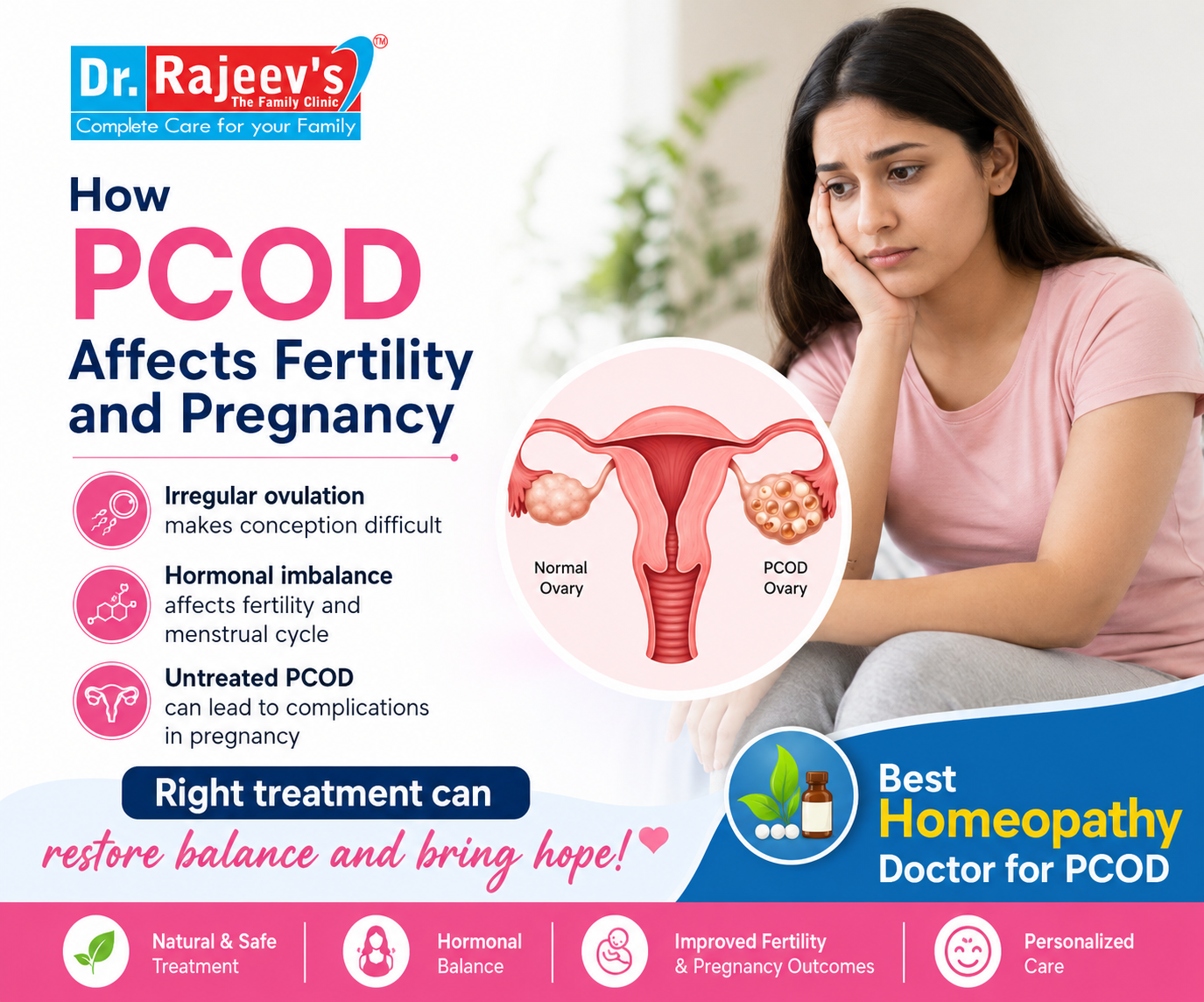
A PCOD diagnosis can be a setback for women who are hoping to become mothers. Questions start to pour in, such as, "Can I get pregnant now?Will my baby be healthy? Do I need IVF? There's a lot of confusion, and emotional burden is very heavy.
The reality is, PCOD can cause fertility problems but not impossible pregnancy. Many women with PCOD are able to conceive naturally and give birth to healthy babies with the proper treatment, lifestyle and guidance of the best homeopathy doctor for PCOD.
PCOD (Polycystic Ovarian Disease) is a hormonal disorder in which the ovary begins to form a multitude of immature or partially mature eggs which develop into small cysts. This results in an increase in the level of androgens (male hormones), insulin resistance and irregular periods.
Ovulation is irregular or may stop — If it does not ovulate regularly, it will be hard to become pregnant
Hormonal imbalance has the ability to upset the uterine lining, and this makes it difficult to get the embryo to implant.
High androgens affect egg quality — Making it less likely that the egg will be a good one to fertilize
Insulin resistance increases the hormone signals — Further disrupting the ovarian cycle
All this, however, PCOD is one of the most treatable causes of female infertility. Early intervention in PCOD (consulting best homeopathy doctor for PCOD) can have a significant impact on the rates of conception.
The most obvious effect that PCOD has on fertility is its ability to interfere with ovulation. Conception won't occur if the egg isn't released. Women suffering from PCOD can have irregular periods, sometimes every 35–60 days, and sometimes not for months.
Eggs from the ovary in PCOD tend to be immature. Sometimes, even if the egg is released into the fallopian tube, the quality may be poor enough for it to fail to be fertilized and implanted.
Low progesterone and high LH levels and androgens will not support conception or early pregnancy maintenance.
Almost 70% of PCOD women suffer from insulin resistance to varying levels. The increase in insulin in high levels stimulates the ovaries to make too many androgens which in turn makes ovulation and fertility even lower.
Irregular periods are when periods do not occur regularly. This may cause an increase in the thickness of the uterine lining over time, making it hard to implant and also raise the risk of early miscarriage.
Women suffering from PCOD who manage to conceive (also through assisted reproduction techniques) have a slightly elevated risk for some pregnancy-related issues. Knowing these can help you prepare and get timely help.
Insulin resistance (from before pregnancy)- A form of hypertension that develops during pregnancy.A type of high blood pressure that occurs during pregnancy.
Preterm birth – Slightly increased risk compared to non-PCOD pregnancies
Causes of miscarriage — Higher risk, particularly if there is an imbalance in hormone levels which is not treated.
Larger birth weight babies – Linked with irregularities in insulin and blood sugar level
Yes — absolutely. When a woman with PCOD has a natural childbirth, such as:
This is the best base to start from when you are trying to conceive after consulting with the best homeopathy doctor for PCOD. Homeopathy works to balance hormones, regulate the menstrual period, and balance the functioning of the ovaries—all of which are directly supportive of natural conception.
Today, homeopathy is gaining more traction as a potent alternative treatment for women suffering from PCOD and desiring to conceive. Homeopathy is different from hormonal medications which induce ovulation and works by naturalizing the body's own hormonal state, as it returns to normal.
The best homeopathy doctor for PCOD will carefully assess your case and will take into consideration all of the above aspects and then prescribe a constitutional homeopathy remedy that will suit you.
Pulsatilla (Puls) is for light and irregular periods, and emotional sensitivity and hormonal imbalance. Make sure to pick a color that is suitable for the woman's situation. Sepia is an excellent choice for bear-down sensations, hormonal fatigue, and irregular ovulation.
All these remedies are prescribed one at a time. Do not self-administer, always get a constitutional remedy from a qualified homeopathist.
These scientifically-proven habits enhance your fertility, in addition to the homeopathic treatment:
Follow a low-glycemic diet, such as quinoa, vegetables, lean proteins and millets Eat foods that are high in omega-3 fat – fatty fish, flaxseeds, walnuts Keep extra sugar, refined carbohydrates and dairy out of your diet Use spearmint tea, which has been proven to naturally lower androgens.
No. PCOD does not make pregnancy impossible but it decreases the ease of getting pregnant. However, in many cases, women can conceive naturally and have a healthy pregnancy with the proper treatment, which means guidance by the best homeopathy doctor for PCOD.
Homeopathy brings back hormonal balance, regulates ovulation and enhances uterine health with individualized constitutional treatment. It aims at the cause of PCOD instead of just artificial stimulation of ovulation.
It is best to start homeopathic treatment 3-6 months prior to attempting to conceive. This gives time for the hormones to be regulated and the cycle to normalize, providing the best environment for conception.
Yes. Homeopathic medicine is extremely diluted, not toxic, and is considered safe during pregnancy. However, make sure to always let your gynecologist and homeopathic doctor know of any medication that you are using.
Yes. Homeopathy can be safely combined with assisted reproductive techniques. Homeopathy is also used alongside IUI or IVF to balance hormones and to minimize stress, which increases the success rate, many fertility experts recommend.
Significantly. Any loss in weight, even 5–10% can resume ovulation in overweight women with PCOD. Weight loss increases insulin sensitivity, decreases androgens, and supports regular menstrual cycles — all of which is beneficial to fertility.


ABHI HOMEO HALL is a one and half decade old renowned clinic that offers the best quality, non-toxic and highly effective treatment in Ranchi, Patna and Delhi.
Read More