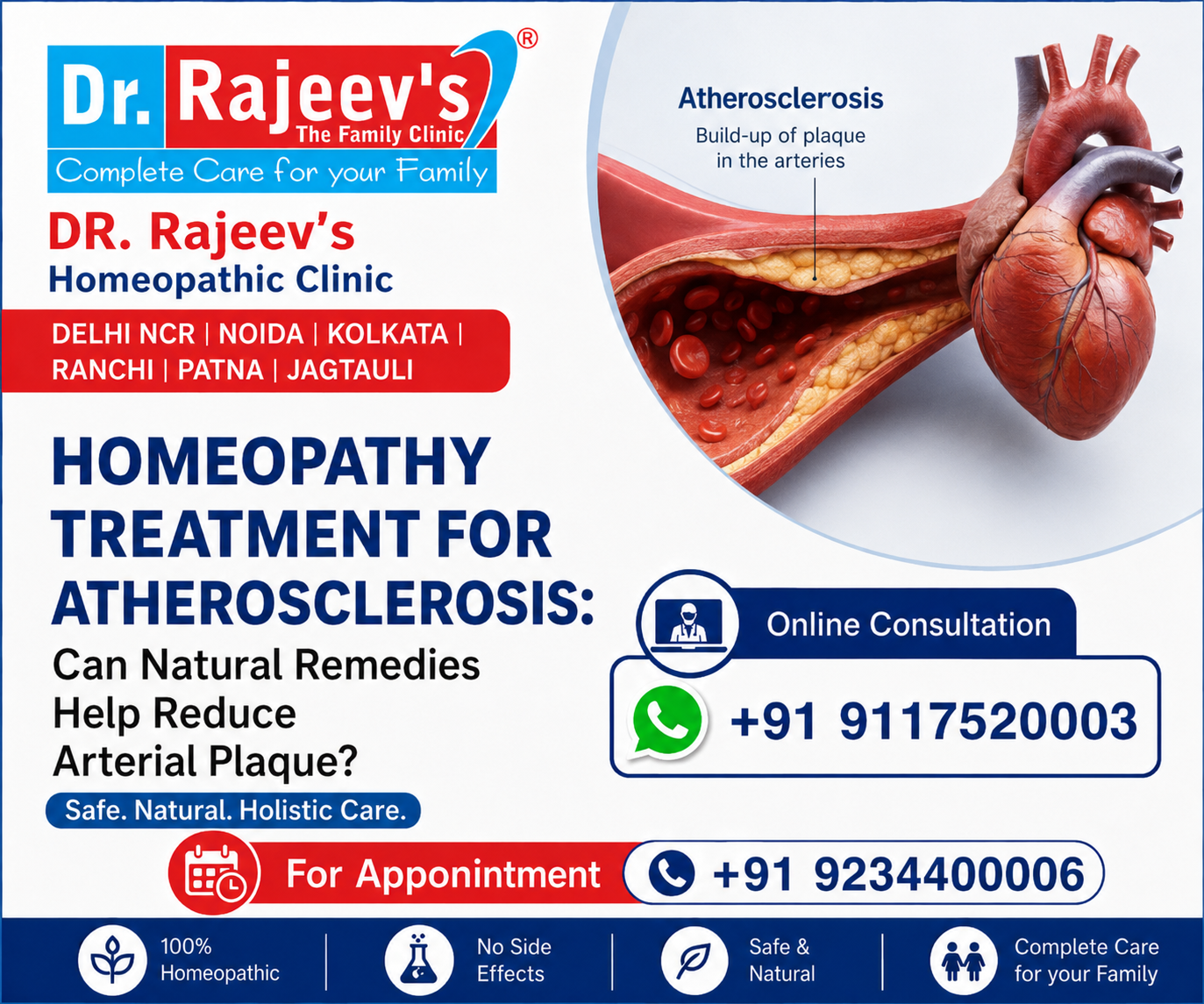
One of the main causes of heart disease, stroke, and peripheral artery disease around the world is the progressive accumulation of material inside the walls of the arteries (atherosclerosis). Traditional drugs used for the treatment of hyperlipidemia are statins, blood thinners and surgery, but there is also the possibility of complementary treatment; many patients are trying these methods. Of these, the treatment of atherosclerosis with homeopathy has been receiving growing attention for its holistic, individualized and side-effect-minimizing mode of action.
Yet can these little pills of sugar and plant-based dilutions really reverse arterial plaque? Here we’ll examine what homeopathy offers, some of the most frequent remedies used, their suggested modes of action and what you may expect to get from this natural way.
Atherosclerosis is a chronic inflammatory disorder in which fatty deposits (plaque) build up in the lining of the inner layer of the artery walls, which consist of cholesterol, calcium, fibrous tissue, and white blood cells. These deposits will, over time:
High LDL cholesterol, high blood pressure, diabetes, smoking, obesity, lack of exercise and chronic stress are risk factors. These risk factors are treated with conventional treatments using a combination of pharmaceuticals and lifestyle modifications, but many patients are looking for more gentle, whole body treatments.
Below are the most commonly indicated remedies in classical & clinical homeopathic practice of atherosclerosis. Such remedies should only be administered by a properly-trained homeopathic doctor.
One must be honest: there are very few large-scale clinical trials of using homeopathy to treat atherosclerosis in particular. Most of the evidence comes from:
There are some clinical studies of single remedies, such as Crataegus (hawthorn) and Ginkgo biloba (homeopathic formulations) that demonstrate cardiovascular effects. Rigorous, double blind RCTs, however, specifically on homeopathy for atherosclerosis, are still areas where research is needed. In conclusion, homeopathy should be considered as a complementary therapy and not a replacement for proven cardiology treatments. It is never recommended for patients to stop any medication without first talking to their physician.
Homeopathy is very personalised. Two patients with atherosclerosis can be given different treatments because:
When it comes to the constitutional assessment, always seek the advice of a registered homeopathic physician (RHM or BHMS/MD Homeopathy) for a proper constitutional assessment. Self-prescribing of medication can be dangerous for cardiovascular disease.
|
Pros |
Cons |
|
Minimal to no side effects |
Limited large-scale clinical evidence |
|
Holistic, individualized approach |
Slow-acting; not suitable for acute crises |
|
Addresses root causes |
Requires skilled practitioner |
|
Can be used alongside conventional care |
Results vary by individual |
|
Affordable and accessible |
Not a replacement for emergency cardiac care |
Homeopathy does not have a proven effect on actually removing the atherosclerotic plaque from the artery such as surgery does. It might possibly contribute to a slower growth of plaque, better vascular health, control of cholesterol and blood pressure levels and aid overall circulatory health with individual constitutional treatment, however.
Homeopathy is a slow and deep acting system. Symptoms also include fatigue, breathlessness and chest heaviness, which are usually improved within 3-6 months of regular treatment. The changes in cholesterol or blood pressure can take 6-12 months. It is important to be patient and to follow-up regularly with your homeopath.
Yes, in most cases homeopathic medicines can be used concurrently with conventional medicines as they are energetically active and will not produce pharmacological drug interactions. Always notify your cardiologist and homeopath of all medications that you are taking, however.
Cholesterinum is a drug which is particularly recommended for arterial disease caused by the high level of cholesterol. Other minerals that are frequently used include Aurum Metallicum, Baryta Muriatica and Calcarea Fluorica. Diagnosing the appropriate remedy will depend on your full symptom profile and is only possible by a trained practitioner of homeopathy.
Yes, remedies are classically used for cardiac symptoms such as those of the chest tightness, palpitations and breathlessness include remedies such as Crataegus, Strophanthus and Cactus Grandiflorus. They are only suitable for use in a professional setting, and must not be used in any way as a substitute for emergency medical treatment.
Absolutely. Other remedies such as Baryta Muriatica and Baryta Carbonica are very appropriate for elderly patients with vascular changes associated with old age. Homeopathy is very gentle and non-toxic and is especially suitable for older adults, who can sometimes be sensitive to the side effects of conventional drugs.
Yes. Constitutional homeopathy can be extremely beneficial in the presence of familial hyperlipidaemia and early arterial disease. Depending on the constitutional type, remedies are indicated in younger patients such as Sulphur, Lycopodium and Natrum Muriaticum.
No matter what approach is used for treating atherosclerosis, diet is an important factor in its management. A healthy diet will complement the effectiveness of homeopathic remedies. Some homeopaths advise that the treatment period should be free of coffee, menthol and camphor as they are thought to be antidotes to the remedies.
Look for BHMS (Bachelor of Homeopathic Medicine and Surgery) or MD (Homeopathy) degree holders who are registered with the Central Council of Homeopathy (CCH) or State Homeopathic Councils in India. It's also better to pick a reputed homeopathic hospital and government homeopathic dispensaries.
Homeopathy is clinically used for a long time and there are several RCTs for individual homeopathic remedies, such as hawthorn, but no large-scale RCTs exist specifically with regard to homeopathy for atherosclerosis. It should be used as an adjunctive therapy to — not a replacement for cardiovascular evidence-based treatment.


ABHI HOMEO HALL is a one and half decade old renowned clinic that offers the best quality, non-toxic and highly effective treatment in Ranchi, Patna and Delhi.
Read More