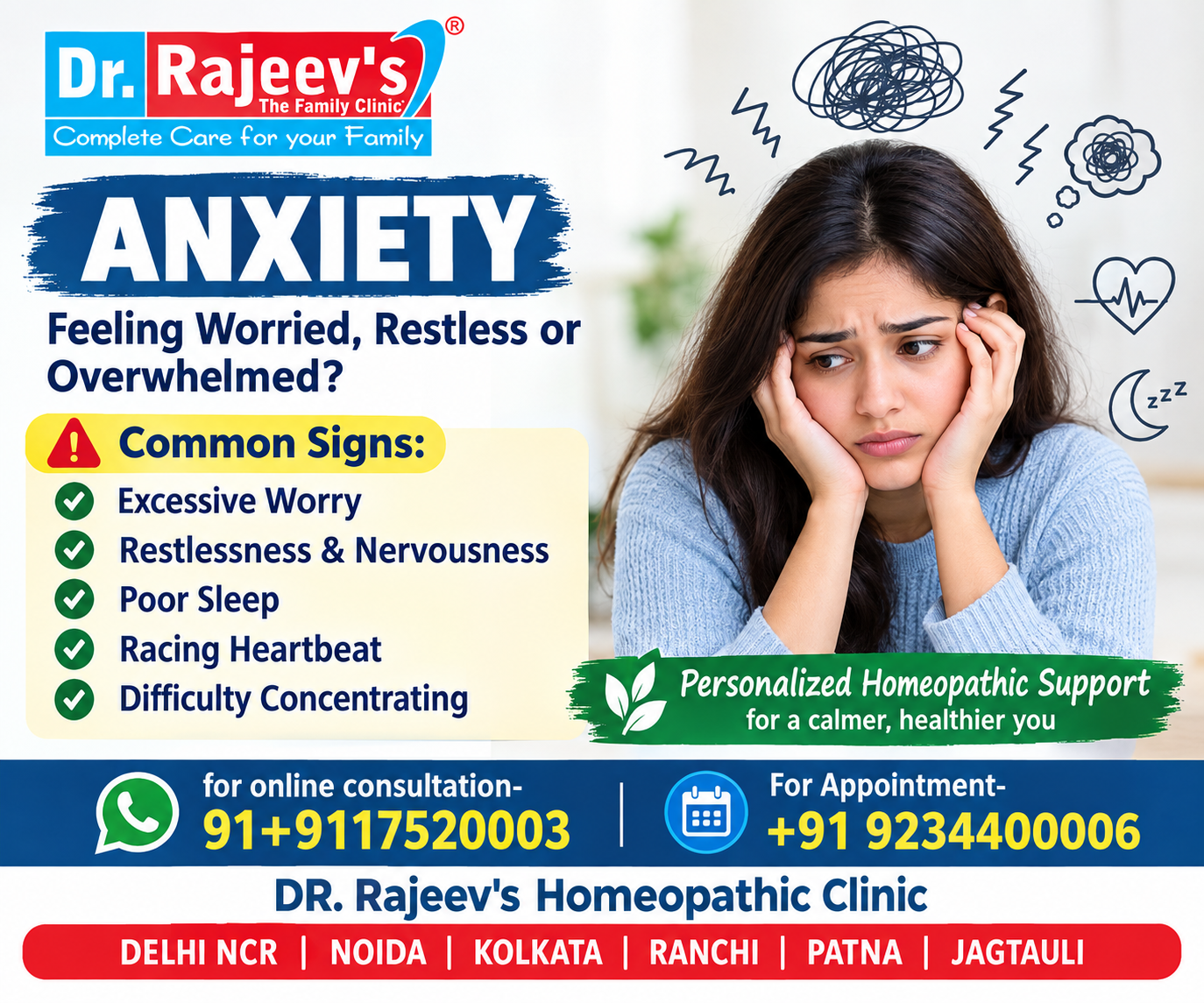
Anxiety is a common emotional response to stress, uncertainty or situations that feel threatening. Feeling worried before an examination, interview or important event can be normal. However, when excessive fear or worry becomes persistent and starts affecting sleep, work, relationships or daily activities, it may indicate an anxiety disorder.
People looking for homeopathy treatment for anxiety should first understand their symptoms and seek an appropriate assessment. Anxiety can have different causes and may require professional mental health care.
Anxiety involves feelings of worry, fear, nervousness or uneasiness. It can affect both the mind and body.
Occasional anxiety is common, but persistent or excessive anxiety may require professional evaluation. Conditions such as generalized anxiety disorder, panic disorder, social anxiety disorder and specific phobias are different forms of anxiety disorders.
Anxiety symptoms can be emotional, physical and behavioral.
Common symptoms may include:
The symptoms can vary from person to person. Some people experience mostly psychological symptoms, while others notice more physical effects.
There is no single cause of anxiety. Several factors may contribute to its development.
Possible anxiety causes include:
Sometimes anxiety develops without an obvious trigger. A professional assessment can help identify contributing factors.
Stress is generally a response to an identifiable challenge or pressure, while anxiety can continue even when there is no immediate threat.
For example, stress may occur because of work deadlines, financial concerns or an upcoming examination. Anxiety may persist beyond the original situation or become difficult to control.
Persistent anxiety that interferes with everyday life deserves professional attention.
Many people search online for homeopathy treatment for anxiety because they are interested in complementary or natural approaches.
However, there is currently insufficient reliable scientific evidence that homeopathy is effective for treating anxiety disorders. Homeopathy should not replace evidence-based treatments such as psychological therapy, prescribed medication when appropriate, or other care recommended by a qualified healthcare professional.
If someone chooses to explore homeopathy as a complementary approach, it is important to discuss this with their healthcare provider and avoid stopping prescribed treatment without medical advice.
The appropriate anxiety treatment depends on the type and severity of symptoms.
A healthcare professional may recommend:
Talking therapies, including cognitive behavioral therapy (CBT), can help people identify unhelpful thought patterns and develop healthier coping strategies.
For some anxiety disorders, a doctor or mental health professional may prescribe medication. Medication should only be taken according to professional advice.
Regular physical activity, adequate sleep, balanced nutrition, relaxation techniques and reducing excessive caffeine or alcohol may support overall well-being.
Alongside professional care, healthy habits can support anxiety management.
Slow, controlled breathing may help reduce physical tension during periods of stress or anxiety.
Poor sleep can make it more difficult to manage stress and emotional symptoms. Try to maintain a consistent sleep schedule.
Regular physical activity can support overall mental and physical well-being.
High caffeine intake can increase sensations such as restlessness, a racing heart or nervousness in some people.
Talking with trusted friends, family members or a mental health professional can provide valuable emotional support.
Consider speaking with a healthcare professional if anxiety:
Professional support can help determine whether symptoms are related to an anxiety disorder or another physical or psychological condition.
If anxiety is accompanied by thoughts of self-harm, suicide or an inability to stay safe, seek immediate help from local emergency services or a crisis service and stay with a trusted person if possible.


ABHI HOMEO HALL is a one and half decade old renowned clinic that offers the best quality, non-toxic and highly effective treatment in Ranchi, Patna and Delhi.
Read More