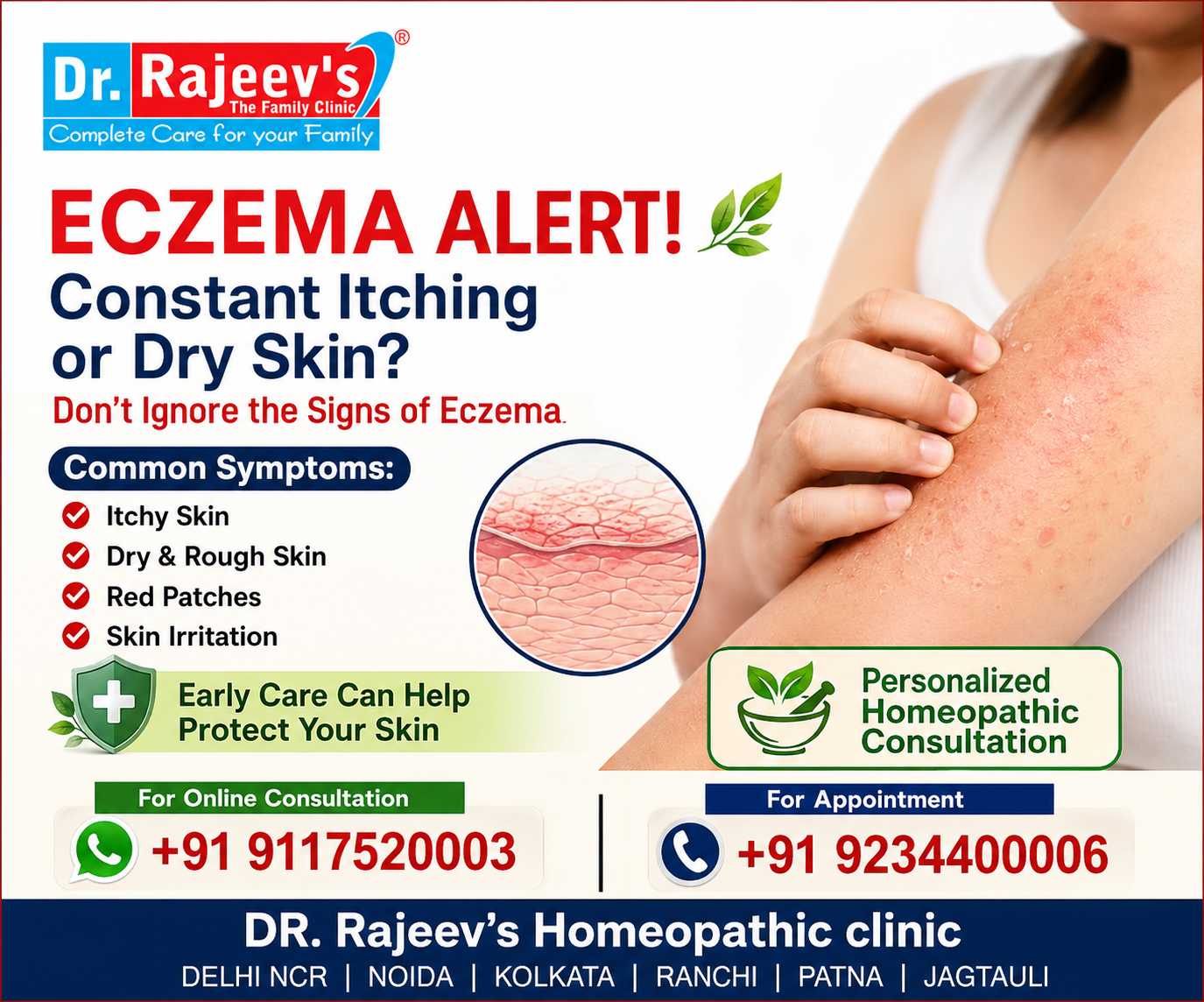
Eczema is a common skin condition that can cause persistent itching, dryness, redness and irritation. It may appear on different parts of the body and can affect children as well as adults. For some people, symptoms may come and go, with periods of improvement followed by eczema flare-ups.
Recognizing the early signs and understanding possible triggers can help people take better care of their skin. If symptoms are persistent, severe or frequently returning, professional medical advice can help identify the appropriate approach.
Eczema refers to a group of conditions that can cause inflamed, dry and itchy skin. Atopic dermatitis is one of the most common forms.
The skin may become dry, rough, red or irritated. In some cases, frequent scratching can damage the skin and increase the risk of infection.
Eczema is not contagious, so it cannot be passed from one person to another through normal contact.
The symptoms of eczema can vary depending on the type, severity and individual.
Common signs include:
The itching associated with eczema can sometimes become particularly uncomfortable at night and may interfere with sleep.
There is no single cause of eczema. It can involve a combination of genetic, immune-system and environmental factors.
People with a family history of eczema or certain allergic conditions may have a greater tendency to develop it.
Possible triggers include:
Triggers differ from person to person, so keeping track of when symptoms appear may help identify patterns.
An eczema flare-up is a period when symptoms become more noticeable or severe. During a flare-up, the skin may become increasingly itchy, dry, red and irritated.
Scratching can temporarily relieve itching but may further damage the skin. Keeping nails short and using appropriate skin-care measures can help reduce scratching-related skin injury.
If flare-ups are frequent or difficult to control, consult a qualified healthcare professional.
In many cases, eczema can be assessed by examining the skin and discussing symptoms and medical history.
A healthcare professional may ask about:
Additional testing may sometimes be recommended when another skin condition, allergy or infection needs to be considered.
Eczema treatment depends on the type and severity of symptoms. A healthcare professional may recommend suitable moisturizers, topical medicines or other treatments when appropriate.
Daily skin care is also important.
Regular use of a suitable fragrance-free moisturizer can help reduce dryness and support the skin barrier.
If a particular soap, detergent, cosmetic or fabric appears to worsen symptoms, reducing exposure may help.
Choose mild, fragrance-free products whenever possible and avoid harsh scrubbing.
Very hot water can worsen dryness for some people. Lukewarm water and gentle cleansing may be more comfortable.
Scratching can break the skin and increase the risk of infection. Keeping the skin moisturized may help reduce dryness-related itching.
It may not be possible to completely prevent eczema, particularly when genetic factors are involved. However, identifying personal triggers and maintaining a consistent skin-care routine may help reduce flare-ups.
Simple measures include moisturizing regularly, avoiding irritating products, managing stress, staying comfortable in hot weather and protecting the skin from excessive dryness.
Some people search for homeopathic treatment for eczema as a complementary approach. However, there is not sufficient reliable scientific evidence that homeopathy can cure eczema.
People considering homeopathy should discuss their condition with a qualified healthcare professional and should not stop prescribed treatment or delay appropriate dermatological care.
Dr. Rajeev’s Homeopathic Clinic provides personalized consultations based on individual symptoms and health needs. Any complementary approach should be considered alongside appropriate medical care.
Consult a healthcare professional if your skin symptoms are persistent, severe, frequently recurring or affecting your daily life.
Medical attention is particularly important if the skin becomes increasingly painful, warm, swollen, develops pus or shows other signs of infection.
Common eczema symptoms include itching, dry skin, redness, rough patches, irritation, scaling and recurring flare-ups.
Eczema causes can involve genetic, immune and environmental factors. Triggers may include dry weather, heat, sweating, soaps, fragrances and certain fabrics.
No. Eczema is not contagious and does not spread from person to person through normal physical contact.
Keep the skin moisturized, avoid known triggers, use gentle skin-care products and avoid excessive scratching. Consult a healthcare professional if symptoms are severe or persistent.
Eczema is often a long-term condition with periods of improvement and flare-ups. Management focuses on controlling symptoms, protecting the skin barrier and identifying triggers.
Seek medical advice if symptoms are persistent, worsening, frequently recurring or if the skin becomes painful, swollen, warm or develops signs of infection.
There is currently insufficient reliable scientific evidence that homeopathy cures eczema. It should not replace appropriate medical diagnosis or evidence-based treatment.


ABHI HOMEO HALL is a one and half decade old renowned clinic that offers the best quality, non-toxic and highly effective treatment in Ranchi, Patna and Delhi.
Read More