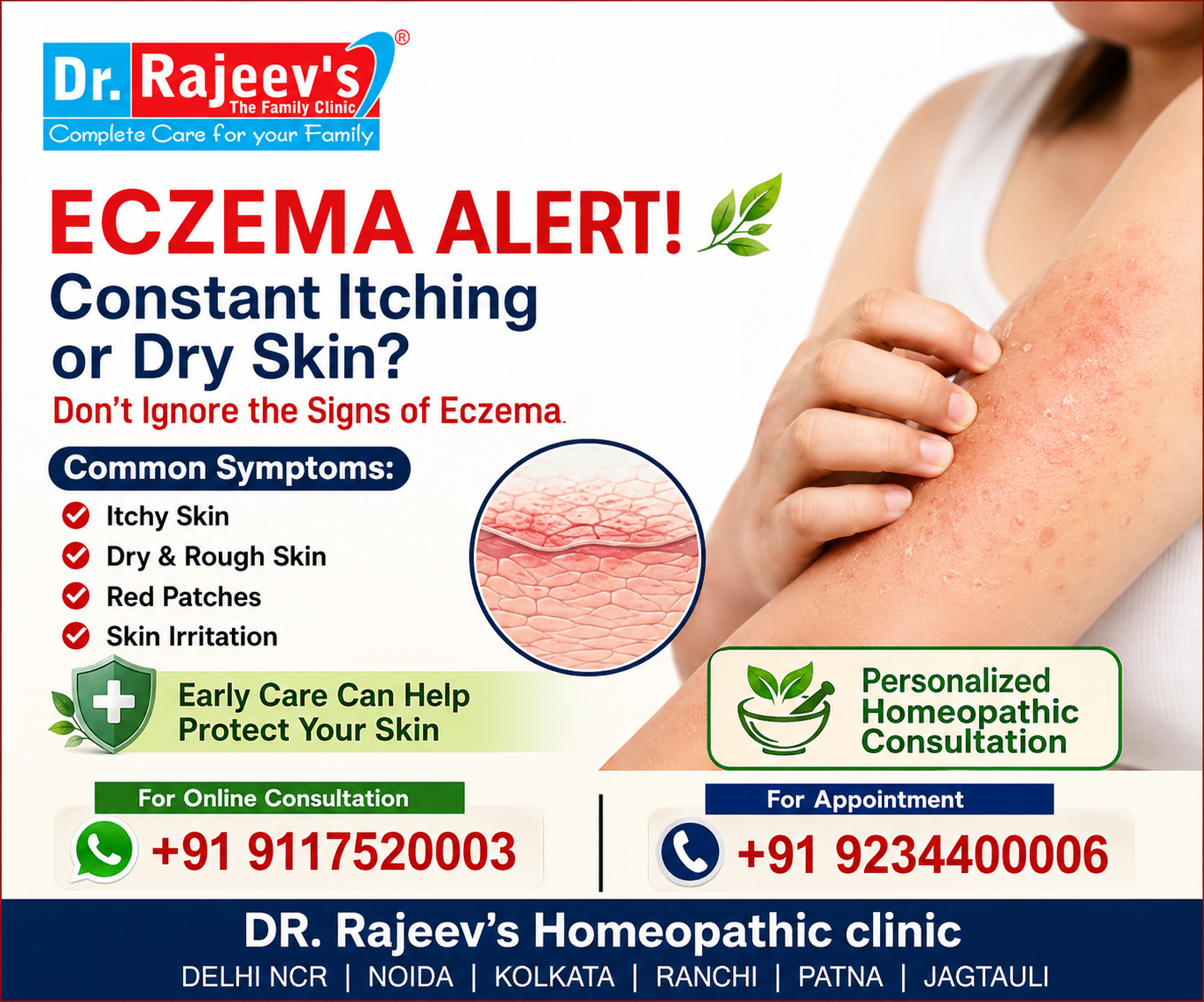
Eczema is a common skin condition that causes inflammation, itching, dryness, and irritation of the skin. It can affect people of all ages, including infants, children, and adults. The most common type is atopic dermatitis, which often appears as dry, itchy patches on the face, hands, elbows, knees, or other parts of the body.
Many people experience recurring flare-ups of eczema that can interfere with sleep, work, school, and daily activities. Understanding eczema symptoms, identifying triggers, and following proper skin care measures are essential for maintaining healthy skin.
Along with conventional dermatological care, some individuals consider homeopathic treatment for eczema as complementary supportive care for overall wellness. At Dr. Rajeev Homeopathic Clinic, Dr. Rajeev provides personalized homeopathic consultations based on each patient's symptoms, lifestyle, and overall health while encouraging appropriate medical evaluation when needed.
Eczema is a chronic inflammatory skin condition that weakens the skin barrier. When the skin barrier is damaged, moisture escapes easily and irritants can enter the skin more easily, leading to dryness, itching, redness, and inflammation.
Eczema is not contagious, so it cannot spread from one person to another.
Common types include:
Many people ask, "What are the symptoms of eczema?"
Common eczema symptoms include:
Persistent itching is often the most troublesome symptom.
The skin may become flaky, cracked, or scaly.
Affected areas often appear red, pink, brown, or gray depending on skin tone.
Repeated scratching can cause the skin to become thick and leathery.
Tiny bumps may ooze fluid and form crusts.
Inflamed skin may feel painful or irritated.
Severe itching can interfere with sleep.
Understanding eczema causes and treatment helps in managing flare-ups effectively.
A family history of eczema, asthma, or allergies increases the risk.
People with eczema often have a weakened skin barrier.
Food allergies, dust mites, pollen, or pet dander may trigger symptoms in some individuals.
Soaps, detergents, fragrances, and chemicals can irritate the skin.
Cold, dry weather or excessive heat may worsen eczema.
Emotional stress can contribute to flare-ups.
Bacterial or viral skin infections may aggravate eczema.
Common Eczema Triggers
Avoiding triggers is an important part of eczema management.
Common triggers include:
Doctors usually diagnose eczema through:
Discussion of symptoms, allergies, and family history.
Examination of the skin rash and affected areas.
In some cases, allergy tests may be recommended.
Patch testing may help identify contact allergens.
Homeopathic Treatment for Eczema
Many individuals explore homeopathic treatment for eczema because it follows an individualized approach.
At Dr. Rajeev Homeopathic Clinic, Dr. Rajeev evaluates:
A personalized consultation is used to develop an individualized wellness plan.
Important: Eczema can sometimes become infected or be confused with other skin diseases. Homeopathy should be considered complementary supportive care and not a replacement for evidence-based dermatological treatment. Seek medical attention for severe eczema, widespread rash, fever, pus, or signs of infection.
Proper skin care is essential for controlling eczema symptoms.
Apply a fragrance-free moisturizer several times a day.
Choose mild, soap-free cleansers.
Avoid long, hot showers that dry out the skin.
Gently pat the skin dry instead of rubbing.
Cotton clothing is usually more comfortable than wool or synthetic fabrics.
Short nails reduce skin damage from scratching.
A humidifier may help during dry weather.
Foods and Eczema
Not everyone with eczema has food triggers, but some people notice worsening symptoms after certain foods. If you suspect a food trigger, consult a healthcare professional before eliminating foods from your diet.
A balanced diet rich in fruits, vegetables, whole grains, healthy fats, and adequate water supports overall skin health.
Eczema cannot always be prevented, especially when genetics play a role, but flare-ups may be reduced by:
At Dr. Rajeev Homeopathic Clinic, we focus on individualized, patient-centered care.
Eczema is a chronic skin condition that can cause itching, dryness, inflammation, and significant discomfort. Recognizing eczema symptoms, identifying triggers, and following a consistent skin-care routine are important steps toward maintaining healthy skin.
While homeopathic treatment for eczema may offer complementary support for overall wellness, it should be used alongside appropriate dermatological care and medical advice. If you experience persistent itching, recurrent eczema skin rash, or worsening symptoms, consult a qualified healthcare professional.
For personalized homeopathic consultation and holistic skin health support, visit Dr. Rajeev Homeopathic Clinic.
Eczema is a chronic inflammatory skin condition that causes itching, dryness, redness, and irritation.
Common symptoms include itchy skin, dry patches, redness, scaling, thickened skin, and recurrent skin rashes.
No. Eczema is not contagious and cannot spread from person to person.
Eczema is associated with genetic factors, skin barrier defects, allergies, irritants, weather changes, stress, and infections.
Doctors diagnose eczema through medical history, physical examination, and sometimes allergy or patch testing.
Homeopathy may be used as complementary supportive care for overall wellness and skin health. It should not replace medically recommended dermatological treatment.
Common triggers include soaps, detergents, fragrances, wool, dust mites, pollen, stress, sweat, and dry weather.
Frequent moisturizing, gentle cleansing, avoiding hot water, wearing soft clothing, and avoiding known triggers are helpful measures.
Seek medical care if the rash becomes severe, painful, infected, widespread, or does not improve with basic skin care.
You can visit Dr. Rajeev Homeopathic Clinic for personalized homeopathic consultations and holistic support for eczema and overall skin health.


ABHI HOMEO HALL is a one and half decade old renowned clinic that offers the best quality, non-toxic and highly effective treatment in Ranchi, Patna and Delhi.
Read More