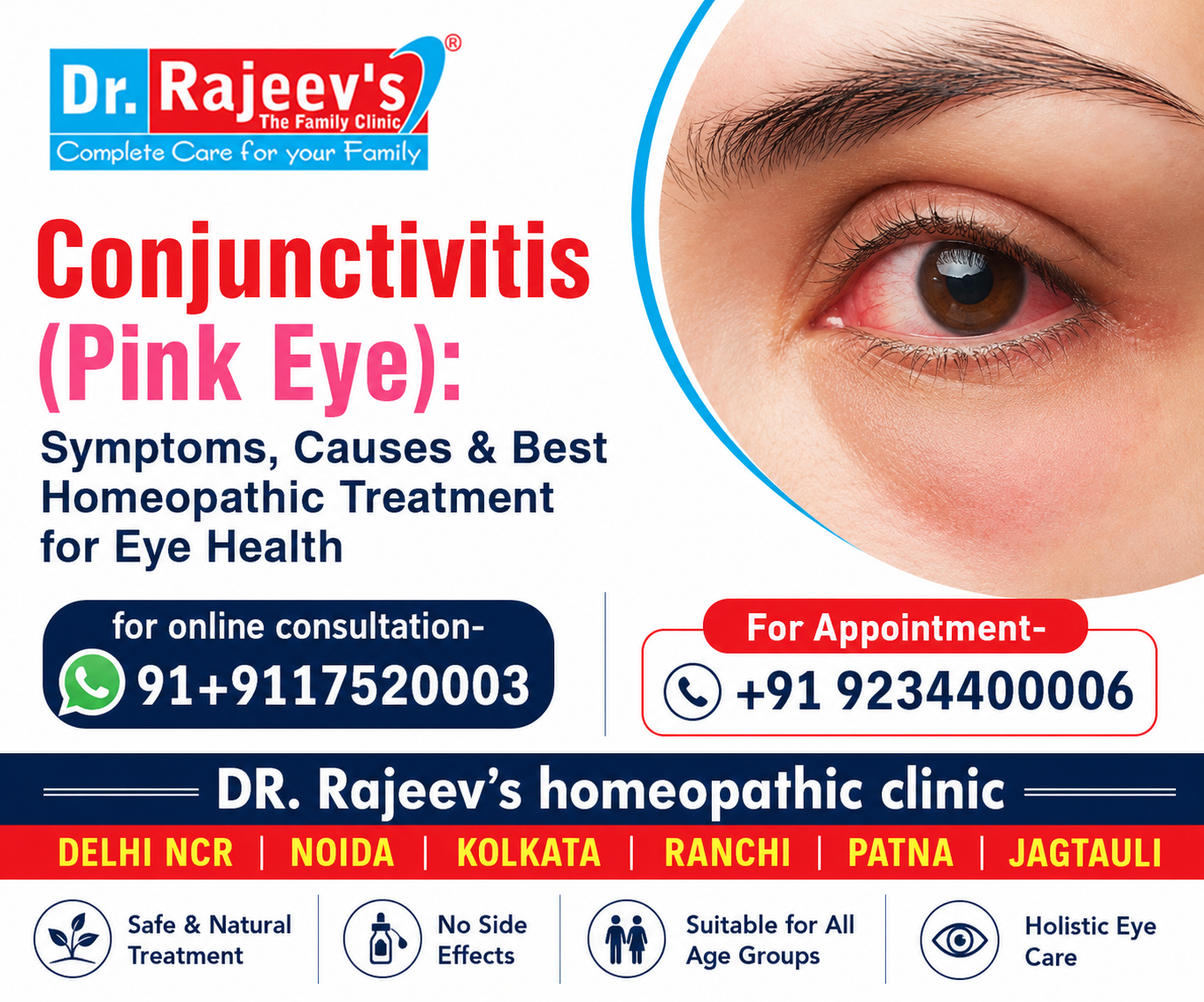
Our eyes are among the most sensitive organs in the body, constantly exposed to dust, pollution, allergens, bacteria, and viruses. One of the most common conditions affecting people of all ages is conjunctivitis, widely known as pink eye.Pink eye can cause redness, irritation, itching, watery discharge, and general discomfort. While usually mild, it can disrupt daily activities like reading, working on screens, driving, and even sleeping.
Many individuals today prefer natural and gentle treatment options to support eye health without side effects. This is where homeopathy shines—offering a holistic approach tailored to each person’s unique symptoms and overall well-being.
In this comprehensive guide, we’ll cover everything you need to know about conjunctivitis: symptoms, causes, prevention tips, and the best homeopathic treatment for eye health.
Conjunctivitis is the inflammation of the conjunctiva—the thin, transparent membrane that covers the white part of your eye and lines your eyelids.
When this membrane gets inflamed, blood vessels become more visible, making the eye appear red or pink—hence the name "pink eye."
Conjunctivitis can affect one or both eyes and occurs in children as well as adults.
Symptoms vary based on the cause and severity. Look out for these signs:
The most noticeable symptom—red or pink discoloration of the white part of the eye.
Persistent itching, burning, or a feeling of irritation.
Watery eyes that may water constantly.
Sticky discharge (yellow/green in bacterial cases) that can cause eyelids to stick together, especially after sleep.
Inflammation may lead to puffy or swollen eyelids.
Bright light may cause discomfort (photophobia).
A feeling like sand or dust is inside the eye.
Understanding the type of conjunctivitis is important for proper management.
This type is caused by viruses and is highly contagious. It often occurs alongside a cold or respiratory infection.
This type is caused by bacteria and may produce thick yellow or green discharge.
Allergic conjunctivitis occurs due to allergens such as pollen, dust, pet dander, or smoke.
This type develops due to exposure to chemicals, smoke, pollution, or foreign particles.
Several factors can trigger pink eye:
- Viral infections – Most common cause of pink eye.
- Bacterial infections– Cause thick discharge and crusting.
- Allergies – Seasonal or environmental allergens.
- Dust and pollution – Chronic eye irritation.
- Contact lens misuse – Poor hygiene or overwearing lenses.
- Chemical exposure – Cleaning products, chlorine, or fumes.
You may be at higher risk if you:
A healthcare professional usually diagnoses conjunctivitis through:
Early diagnosis helps prevent complications and reduces spread, especially in contagious forms.
Many people now seek homeopathic treatment for conjunctivitis because it is natural, gentle, and free from harsh chemicals. Homeopathy does not just suppress symptoms—it works by stimulating the body’s own healing response.
Based on this detailed assessment, a personalized treatment plan is prepared—not a one-size-fits-all remedy.
While undergoing treatment, proper eye hygiene is essential for a faster recovery:
Wash hands frequently – Reduces the spread of infection.
Avoid touching your eyes – Touching worsens irritation.
Don’t share personal items – Towels, pillows, cosmetics, or eye drops.
Use clean towels daily – Bacteria can linger on fabrics.
Stop wearing contact lenses – Switch to glasses until fully recovered.
Protect your eyes outdoors– Wear sunglasses to reduce light sensitivity and dust exposure.
Consult a healthcare professional immediately if you experience:
Prompt medical evaluation is crucial to protect your vision and eye health.
At Dr. Rajeev Clinic, you receive compassionate, individualized care based on homeopathic principles. The clinic focuses on treating the root cause—not just managing symptoms.
Whether you're dealing with acute pink eye or recurrent eye infections, the clinic is committed to providing professional guidance and comprehensive care.
Conjunctivitis is inflammation of the conjunctiva, causing redness, irritation, and eye discharge.
Viral and bacterial conjunctivitis are highly contagious. Allergic conjunctivitis is **not** contagious.
Viruses, bacteria, allergies, dust, pollution, chemicals, and contact lens misuse.
Yes, it can affect one or both eyes.
Viral: 5–7 days. Bacterial: 2–5 days with treatment. Allergic: as long as allergen exposure continues.
Yes. Homeopathy offers a gentle, individualized approach that supports natural recovery.
Very common in children, especially in schools and daycare settings.
Wash hands frequently, avoid touching eyes, don’t share personal items, and practice good contact lens hygiene.
Yes. Switch to glasses until your eyes are completely healed and your doctor approves.
If symptoms worsen, vision changes, severe pain occurs, or symptoms persist beyond a few days.


ABHI HOMEO HALL is a one and half decade old renowned clinic that offers the best quality, non-toxic and highly effective treatment in Ranchi, Patna and Delhi.
Read More