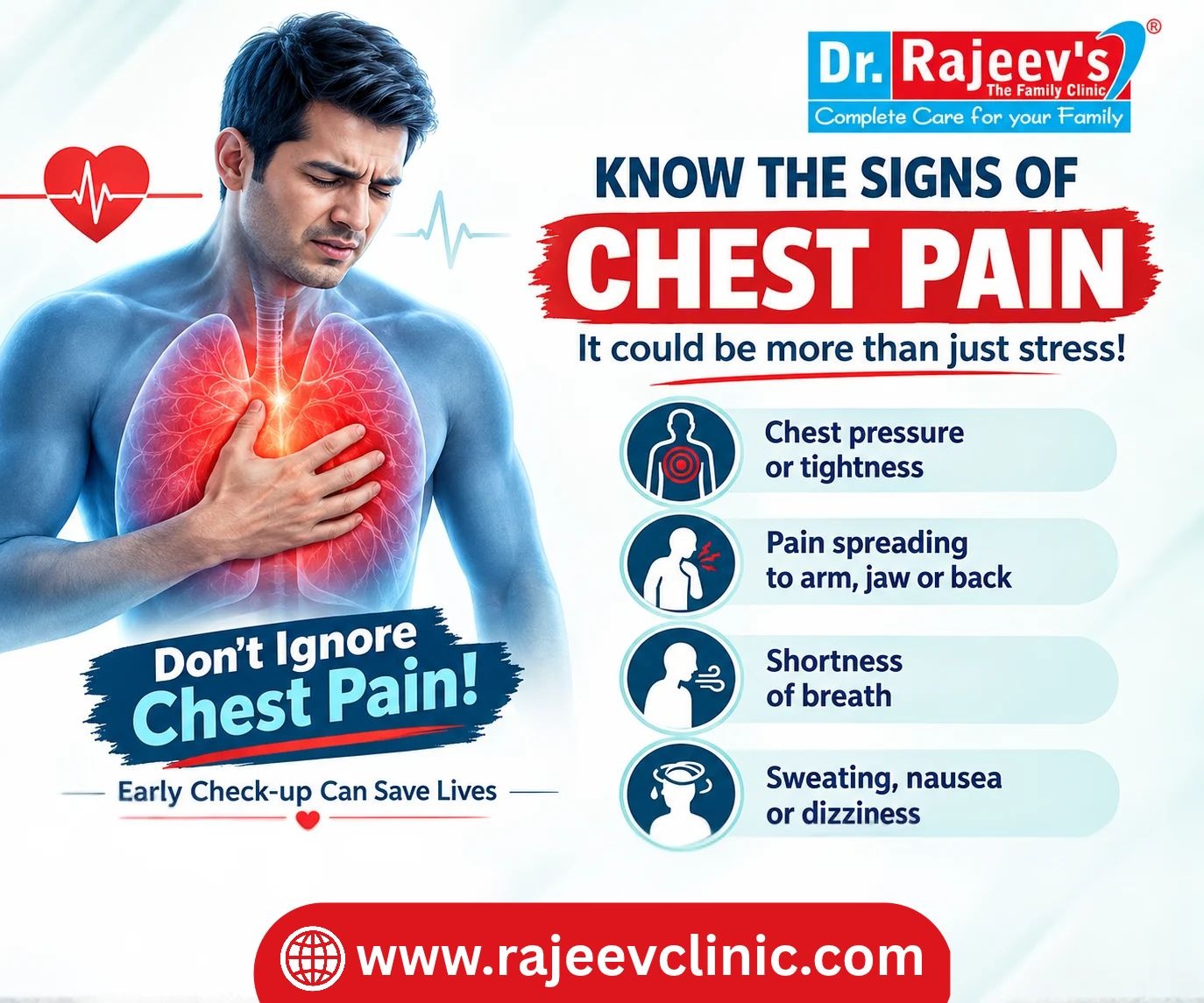
Chest pain is a symptom that should never be ignored. It may feel like pressure, tightness, burning, heaviness, or a sharp pain in the chest. Sometimes it is related to muscle strain or digestive problems, but it can also indicate a serious heart or lung condition.
Recognizing chest pain symptoms and understanding when to seek medical attention can help you make safer healthcare decisions. Chest discomfort accompanied by breathing difficulty, sweating, dizziness, nausea, or pain spreading to the arm, jaw, back, or shoulder may require emergency care.
At Dr. Rajeev’s Family Clinic, we encourage people to understand their symptoms and seek appropriate professional medical evaluation. The first priority with new or unexplained chest pain is to rule out potentially life-threatening causes.
Chest pain can affect people differently depending on its cause. Some people experience mild discomfort, while others experience intense pressure or sudden pain.
Common chest pain symptoms include:
These symptoms can have different causes. It is not possible to identify the cause reliably from symptoms alone.
There are several possible causes of chest discomfort. Some are relatively minor, while others require urgent medical treatment.
Heart conditions are an important cause to consider when evaluating chest pain.
Angina may cause pressure or discomfort when the heart muscle does not receive enough oxygen-rich blood. A heart attack can cause chest pressure, squeezing, pain, sweating, nausea, or shortness of breath.
Never assume that chest pain is caused by stress or acidity without appropriate medical assessment.
Acid reflux and heartburn can produce a burning sensation behind the breastbone. Symptoms may occur after meals or when lying down.
However, digestive symptoms can sometimes resemble heart-related pain. New, unexplained, or severe chest discomfort should be assessed rather than self-diagnosed.
Muscle strain or inflammation around the rib joints can cause pain that worsens with certain movements, twisting, or pressing on the affected area.
Even if the pain appears muscular, seek medical advice if it is new, persistent, or concerning.
Certain lung conditions, including pneumonia, pleurisy, and pulmonary embolism, may cause chest pain. Pain associated with breathing, coughing, fever, or breathlessness needs appropriate evaluation.
Anxiety or a panic attack can sometimes cause chest tightness, a racing heartbeat, sweating, dizziness, and rapid breathing.
However, these symptoms overlap with those of serious physical conditions. Do not assume that chest pain is caused by anxiety until urgent medical causes have been considered.
Recognizing possible heart attack symptoms is essential because prompt emergency treatment can be lifesaving.
Watch for the following warning signs:
Heart attack symptoms can vary, and not everyone experiences severe chest pain.
What should you do? If you experience new or unexplained chest pain with these warning signs, call India’s emergency number 112 or seek emergency medical assistance immediately. Do not wait for the symptoms to disappear or attempt to treat them with home remedies.
For more information, see the
You should seek medical evaluation for new, unexplained, recurring, or persistent chest pain, even if the discomfort appears mild.
Seek emergency care immediately for:
Do not drive yourself if you may be experiencing a heart attack. Follow the emergency operator’s instructions and get professional help promptly.
The appropriate diagnosis depends on the symptoms, medical history, and examination findings.
A healthcare professional may recommend:
Not every patient needs every test. The treating medical team determines which investigations are appropriate.
Although not all causes of chest pain can be prevented, healthy habits can help reduce the risk of cardiovascular disease.
These habits support long-term health but do not replace emergency evaluation when chest pain occurs.
Some people explore homeopathy for general wellness or other health concerns. However, homeopathy has no reliable scientific evidence of effectively treating unexplained chest pain, a heart attack, or other serious causes of chest discomfort.
Chest pain is a symptom rather than a single disease, and treatment depends on identifying its cause. Homeopathic remedies should never delay emergency assessment or replace evidence-based diagnosis, prescribed medication, or hospital treatment.
At Dr. Rajeev’s Family Clinic, patients should be encouraged to seek appropriate medical evaluation for chest pain before considering any complementary approach. No remedy should be promoted as a substitute for emergency or specialist care.
Common symptoms include chest pressure, tightness, sharp pain, burning, and discomfort that may spread to the arms, jaw, shoulders, or back. Sweating, nausea, dizziness, and shortness of breath can also occur.
Yes. Acid reflux and heartburn can cause burning chest discomfort. However, heart-related pain may feel similar, so new or unexplained chest pain should not automatically be attributed to acidity.
Stress and panic attacks can cause chest tightness, rapid breathing, and a racing heartbeat. Because these symptoms can overlap with serious medical conditions, appropriate medical assessment is important.
Chest pain is an emergency when it is sudden or severe, persists, spreads to the arm or jaw, or occurs with shortness of breath, sweating, nausea, or faintness. Call 112 in India for emergency assistance when a heart attack or other serious condition is suspected.
There is insufficient reliable scientific evidence that homeopathy effectively treats chest pain or its potentially serious underlying causes. Seek appropriate medical evaluation and do not delay evidence-based treatment.


ABHI HOMEO HALL is a one and half decade old renowned clinic that offers the best quality, non-toxic and highly effective treatment in Ranchi, Patna and Delhi.
Read More