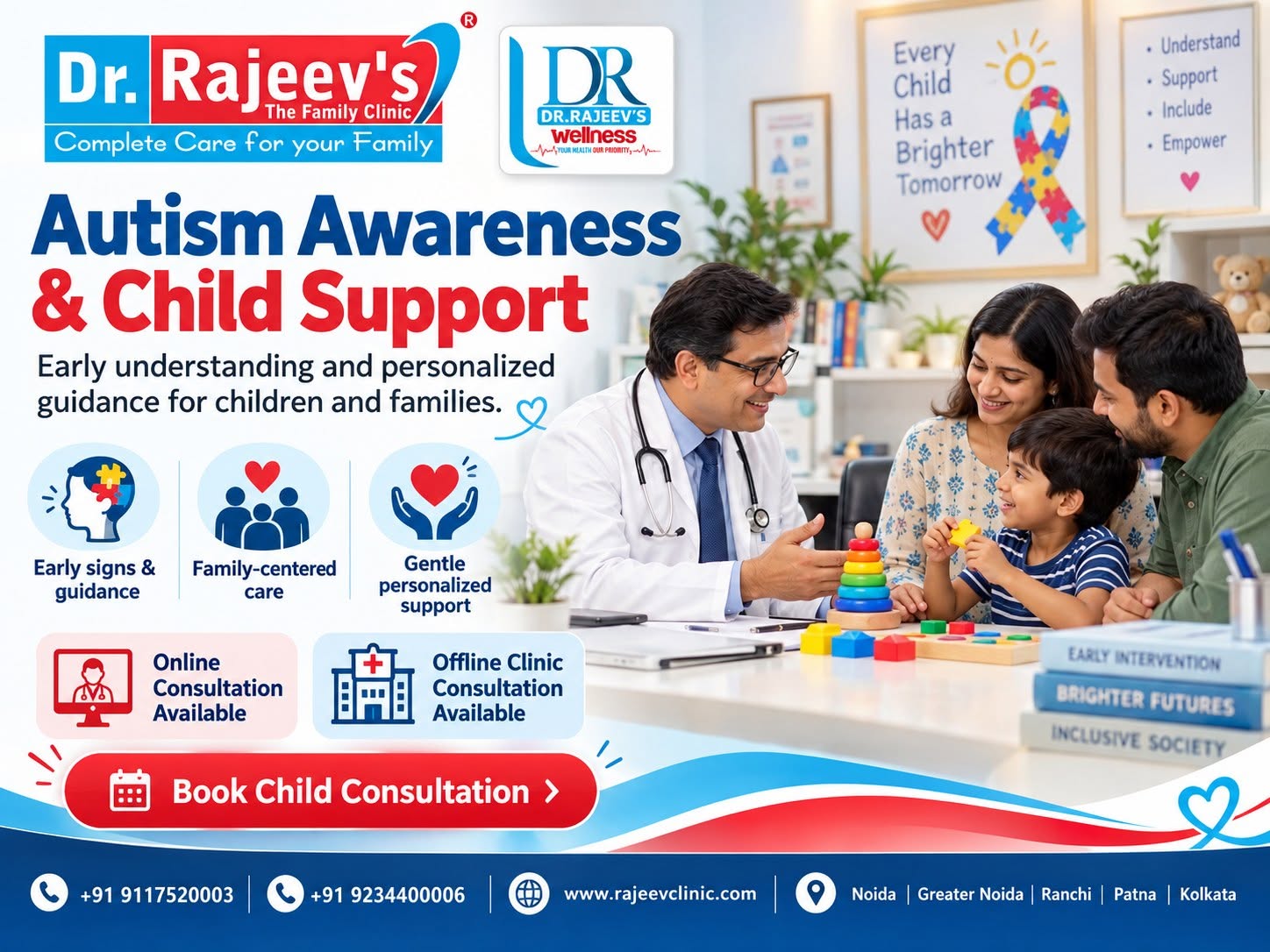
Every child develops at their own pace. Some children may need additional support with communication, social interaction, learning or everyday activities. Understanding these differences can help parents seek appropriate guidance and support.
If you notice developmental differences in your child, consulting a qualified autism doctor or developmental specialist can help you understand your child's needs and the next steps.
Autism spectrum disorder (ASD) is a neurodevelopmental condition that can affect communication, social interaction, behavior and sensory experiences. Every autistic child is different, with individual strengths, interests and support needs.
Autism spectrum disorder is a developmental condition that affects how a person communicates, interacts with others and experiences the world.
Some children may have difficulty with spoken language or social communication. Others may prefer predictable routines, repeat certain movements or have strong interests in specific subjects.
An autism doctor can help families understand developmental concerns and arrange an appropriate evaluation or referral when needed.
Autism is not caused by poor parenting, and children should never be blamed or stigmatized for their developmental differences.
Recognizing possible signs of autism can help parents seek timely developmental assessment. Signs vary depending on the child's age and individual development.
Some possible signs include:
These signs do not automatically mean a child has autism. A qualified professional should assess developmental concerns rather than relying on a checklist alone.
Consider seeking professional advice if your child has ongoing communication or social-development concerns, shows repetitive behaviors that affect daily activities, or has developmental skills that seem delayed.
You should also seek an evaluation if your child loses previously acquired language, social or other developmental skills.
An autism doctor or qualified developmental specialist can review your child's developmental history, discuss your concerns and recommend appropriate screening or further assessment.
Parents do not need to wait until a child reaches school age to raise concerns. Early evaluation can help identify support needs sooner. The CDC explains that autism can sometimes be identified by 18 months, and an experienced professional may make a reliable diagnosis by age two.
There is no single blood test or medical scan that diagnoses autism. Diagnosis generally involves reviewing developmental history and observing the child's communication, behavior and social interaction.
Depending on the child's needs, the evaluation may involve:
A screening result alone does not confirm autism. A comprehensive evaluation is important for understanding the child's strengths and support needs.
Early support can help children develop useful communication, learning, social and everyday living skills. Support should be selected according to each child's individual needs.
Depending on the assessment, a care plan may include:
Early intervention does not mean every child will follow the same developmental path. Goals should be realistic, personalized and focused on the child's well-being, participation and independence.
Evidence-based developmental, behavioral and educational interventions are important parts of autism support.
Parents and caregivers play an important role in creating a supportive environment.
Here are some practical steps:
The goal is not to make every child behave in the same way. It is to help each child feel understood, safe, included and supported.
Dr. Rajeev's Family Clinic promotes autism awareness, early understanding and personalized guidance for children and families.
As highlighted in the clinic poster, online and offline child consultations are available. Families can contact the clinic to ask about consultation services and the appropriate next steps for their child's needs.
If autism is suspected, it is important to seek assessment from a qualified professional with appropriate expertise in child development and autism. Families may need referral to a developmental pediatrician, child psychologist, speech-language therapist or another relevant specialist.
An autism doctor should help families understand the evaluation process and appropriate support options. No single consultation or alternative treatment should be presented as a guaranteed cure for autism.
An autism doctor or qualified developmental specialist evaluates developmental concerns, helps assess possible autism and recommends appropriate referrals, interventions and ongoing support.
Possible signs include differences in communication, limited use of gestures, difficulty with social interaction, repetitive behaviors and strong preferences for routines. These signs require professional assessment and do not independently confirm autism.
Autism can sometimes be identified around 18 months, and diagnosis by an experienced professional may be reliable by age two. Concerns can be assessed at any age.
Individualized early intervention can help children develop communication, learning, social and daily living skills. Outcomes vary, and support should be tailored to the child.
Depending on your location and the child's needs, you may consult a developmental pediatrician, child neurologist, child psychologist or another qualified professional experienced in autism assessment.
No. Autism is a neurodevelopmental condition and is not caused by poor parenting.
There is no reliable scientific evidence that homeopathy cures autism or treats its core developmental characteristics. It should not replace developmental assessment, evidence-based interventions, speech and language support or other recommended care.
Seek guidance when you notice persistent developmental concerns, delayed communication, differences in social interaction or loss of previously acquired skills. Early evaluation can help identify suitable support.


ABHI HOMEO HALL is a one and half decade old renowned clinic that offers the best quality, non-toxic and highly effective treatment in Ranchi, Patna and Delhi.
Read More