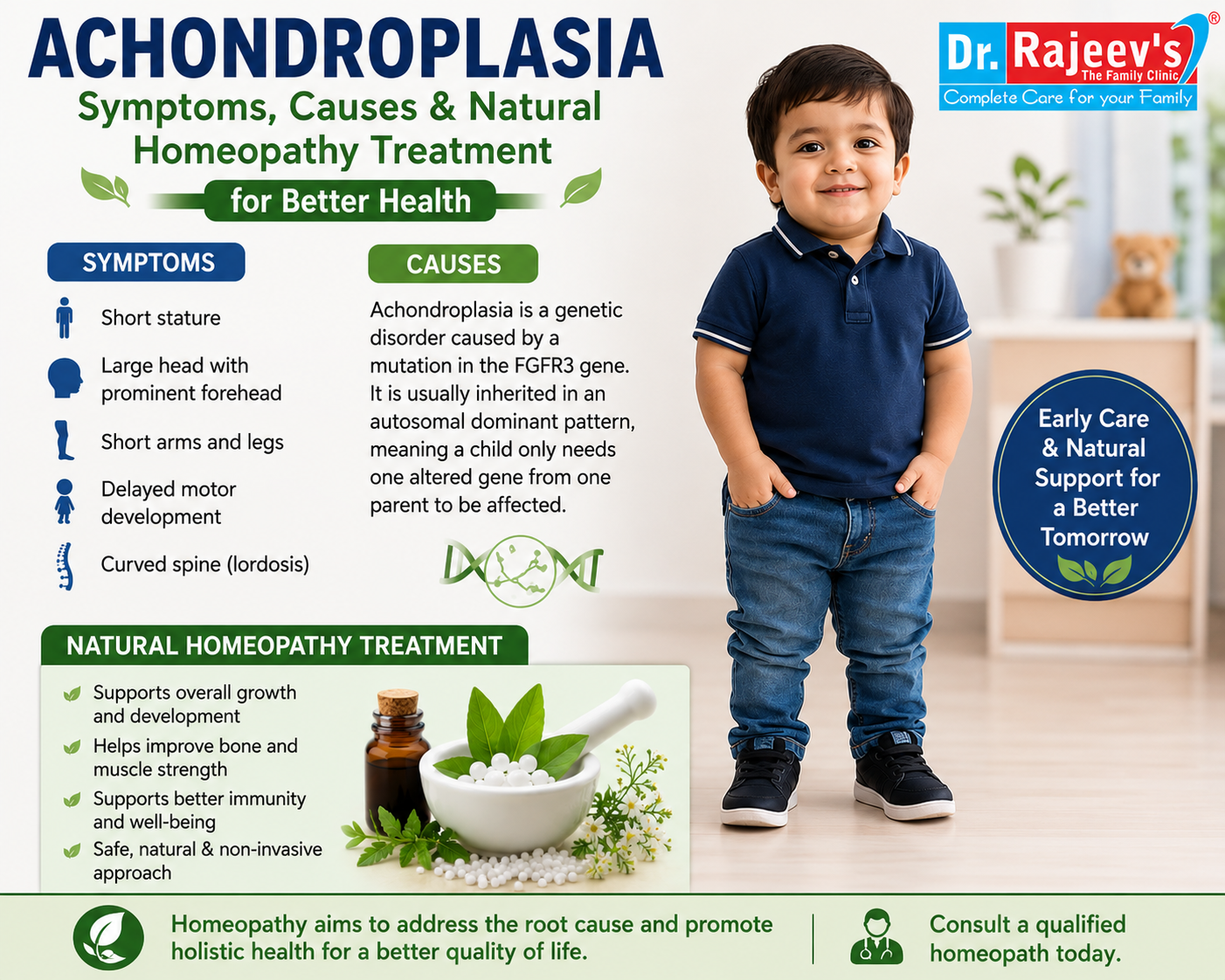
Achondroplasia is one of the most common types of dwarfism that affects bone growth and physical development. It is a genetic condition in which the arms and legs become shorter than normal, while the body size may remain average. Although achondroplasia is not usually life-threatening, it can cause several physical and health-related challenges throughout life.
Parents often become worried after noticing delayed growth or shorter height in their child. Early diagnosis, proper medical care, healthy lifestyle habits, and supportive treatment can help improve overall health and quality of life.
Many families today also look for natural and holistic approaches to support overall well-being. Consulting an experienced homeopathy doctor at a trusted homeopathy clinic may help provide supportive care for physical discomfort, immunity, bone health, and general wellness.
Achondroplasia is a genetic bone growth disorder that affects the development of cartilage into bone. This condition mainly impacts the long bones of the arms and legs, resulting in shorter height.
People with achondroplasia usually have:
The condition is present from birth and can be identified during pregnancy or early childhood.
The symptoms of achondroplasia may vary from person to person. Some common signs include:
Children with achondroplasia generally have shorter height compared to other children of the same age.
The upper part of the arms and thighs may appear shorter.
A prominent forehead and larger head are common features.
Some individuals may develop spinal curvature or posture-related issues.
Delayed walking or motor development may occur in some children.
Joint stiffness, back pain, or leg alignment problems may develop over time.
If these symptoms are noticed early, proper medical evaluation is important.
Achondroplasia occurs due to a mutation in the FGFR3 gene, which affects bone growth.
Most cases occur due to spontaneous genetic changes before birth.
Sometimes the condition may be inherited from parents.
The condition is not caused by diet, lifestyle, or pregnancy habits.
People with achondroplasia can lead active and successful lives, but some may face physical challenges such as:
Supportive care, regular monitoring, and emotional encouragement play a very important role.
Homeopathy does not claim to change genetic conditions like achondroplasia, but it may help support overall health and manage associated discomfort naturally.
Many families choose homeopathy because it focuses on holistic wellness and individualized care.
A qualified homeopathy doctor may help support:
Treatment at a professional homeopathy clinic is personalized according to the patient’s condition and symptoms.
Homeopathy is often used as supportive care along with regular medical guidance.
An experienced homeopathy doctor studies several factors before recommending treatment.
The doctor may consider:
Based on this, supportive remedies may be prescribed for overall wellness.
(Medicines should only be taken under professional supervision)
Often used for bone development and growth support.
Helpful for weakness and delayed physical development.
May support bone strength and immunity.
Traditionally used for bone-related discomfort.
Helpful for joint and ligament support.
The right medicine is selected by a qualified homeopathy doctor according to individual symptoms.
Along with care from a homeopathy clinic, healthy habits can support overall well-being.
Provide calcium-rich foods, proteins, fruits, and vegetables.
Gentle exercises and physiotherapy may help improve flexibility and mobility.
Excess weight may increase pressure on joints and spine.
Children with achondroplasia may need confidence-building and emotional encouragement.
Routine monitoring helps detect complications early.
Some individuals may develop complications such as:
Early medical attention is important for managing these issues.
Early diagnosis helps families understand the condition better and begin proper supportive care. With the right medical advice, healthy lifestyle, and emotional support, individuals with achondroplasia can enjoy a better quality of life.
Achondroplasia is a genetic bone growth disorder that causes short height and shorter limbs.
It is usually manageable, but some people may develop bone or spinal complications.
Homeopathy does not cure genetic conditions but may help support overall health and comfort naturally.
Yes, homeopathy is generally considered safe when prescribed by a qualified homeopathy doctor.


ABHI HOMEO HALL is a one and half decade old renowned clinic that offers the best quality, non-toxic and highly effective treatment in Ranchi, Patna and Delhi.
Read More